A useful color test for clothes ends with something you can wear, rather than a label you have to shop for. Pull out a few tops, find a window, and compare them against the same face in the same light. You are looking for combinations you enjoy and differences you can describe. A ten-minute check with a navy sweater and two shirts can tell you more about tomorrow's outfit than a long quiz built around eye color.
Choose one getting-dressed problem before opening the wardrobe
Start with a small decision: a top for video meetings, a shirt to wear with brown trousers, or a dress for an evening event. Each calls for a slightly different test. A neckline matters on camera; a full-length outfit matters for a wedding photograph. Testing every color you own at once makes it difficult to remember what you liked and why.
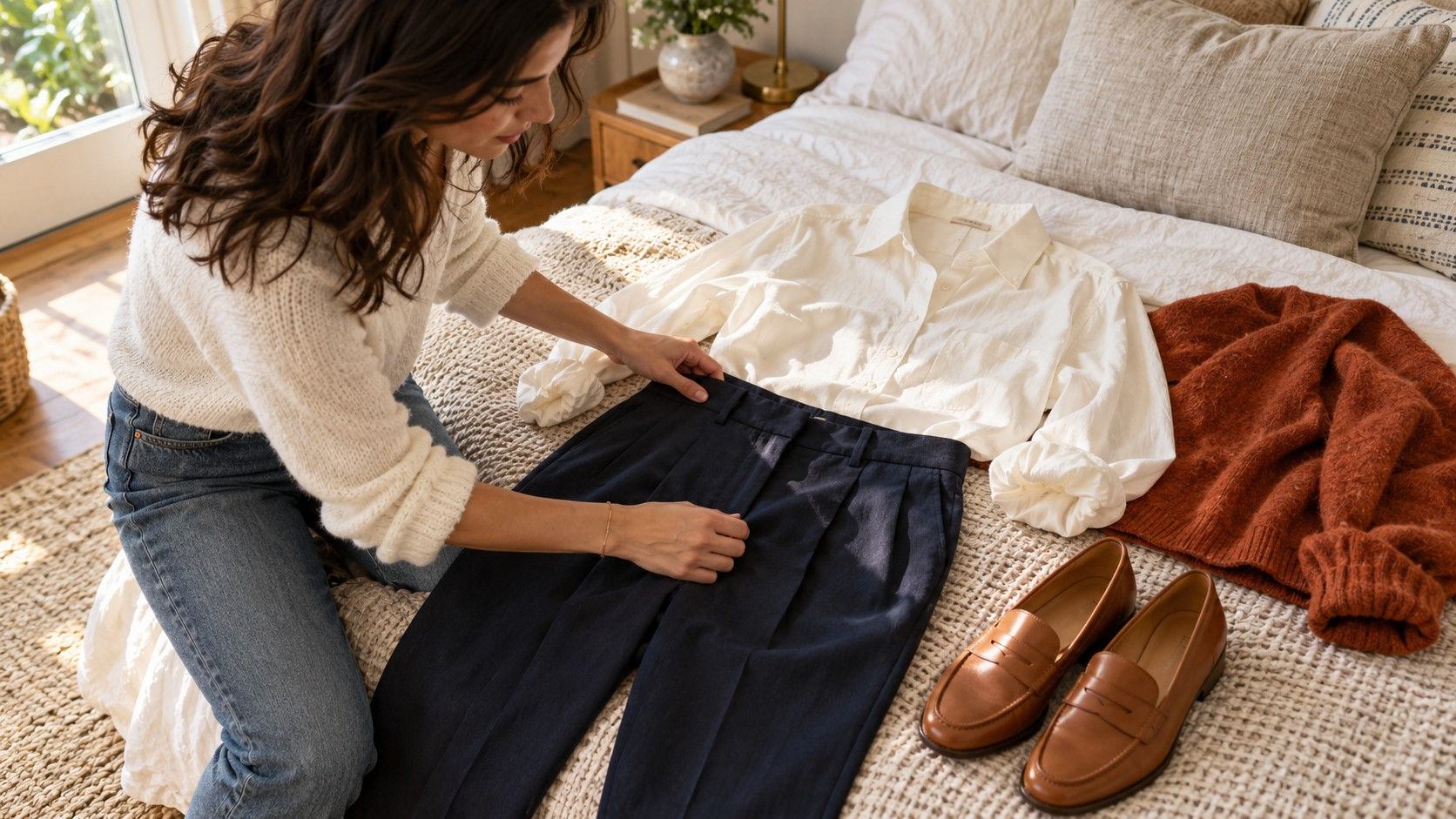
Set out six to eight garments, including two you already wear happily. Those familiar pieces act as reference points. Add a couple that tend to stay on the hanger, but leave the shoes and jewelry aside for the first comparison. If your favorite is a worn cotton T-shirt, do not expect a shiny party blouse to behave exactly the same way simply because both are blue.
Write down the decision in ordinary terms: “Which pale shirt works under this charcoal jacket?” is easier to answer than “What is my perfect palette?” Keep fit in mind too. A collar that pinches or a shoulder seam that falls awkwardly can distract you from a color you otherwise like. For the first round, hold garments up instead of changing into each one.
Set up daylight draping without turning the room into a studio
Face a window with indirect daylight and keep your position fixed. A step away from the window often avoids the harsh patches cast by direct sun. Turn off a nearby yellow lamp if it changes the appearance of the fabrics. A plain wall behind you helps, although a normal bedroom is fine; move a bright blanket or red curtain if its reflection is obvious.
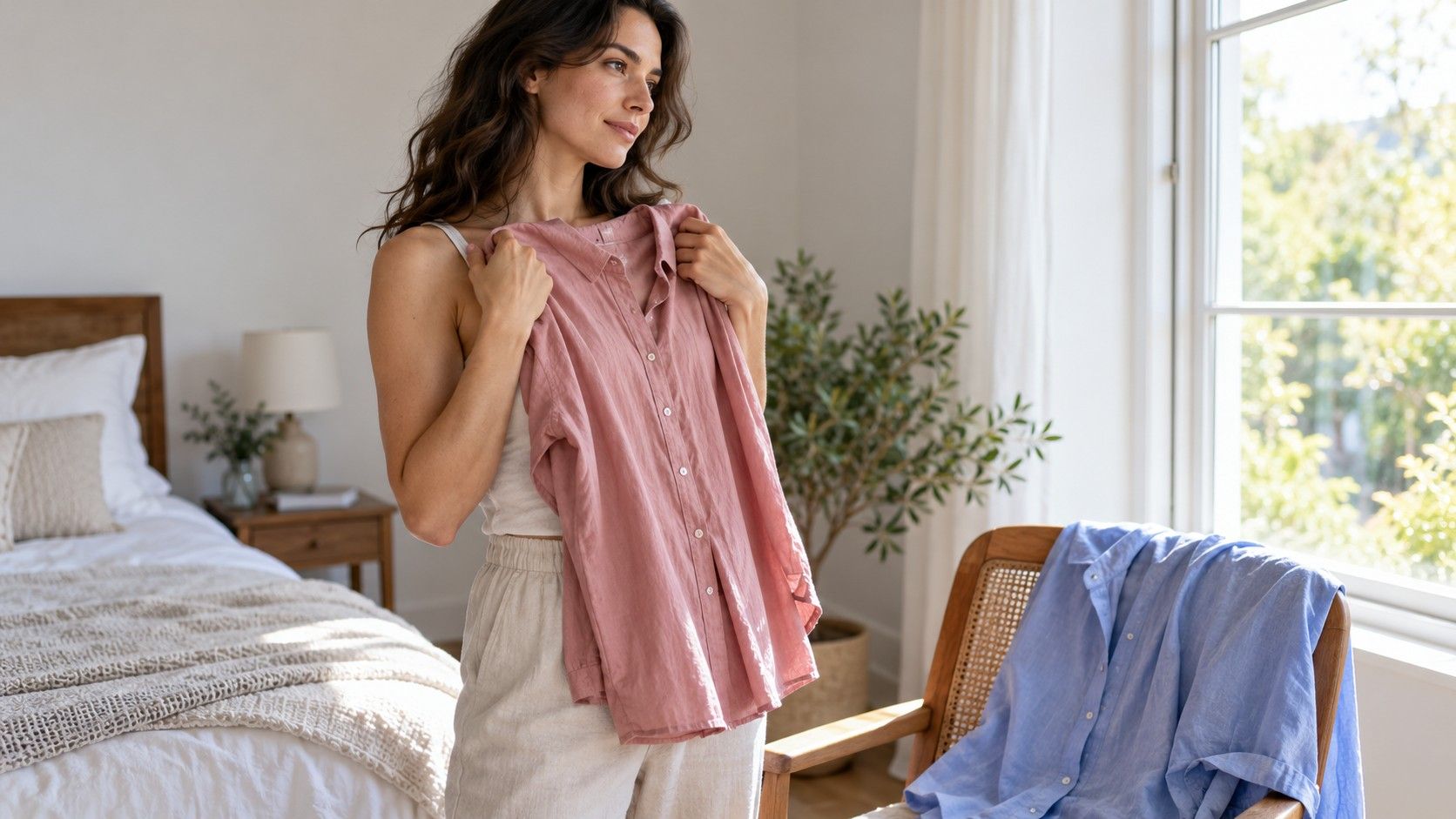
Hold the fabric below your chin, high enough to cover the top you are wearing. Fold bulky garments so a similar area is visible each time. A wide cream sweater beside a narrow strip of pink is an uneven comparison. Take off a strongly colored scarf and keep the same hairstyle through the round. Use the makeup you expect to wear for the occasion, or none if that reflects your daily routine.
Fabric reflection can put a faint wash of color beneath your chin, especially with a vivid or glossy piece close to your face. That is a lighting effect worth noticing, not evidence about your health or an instruction to avoid the color. Step back and check whether it remains visible at an ordinary conversational distance. Clothes need to work outside a close-up mirror inspection.
Compare two garments at a time and name the difference
Begin with comparison pairs that answer one question. Try soft white against cream, a muted blue against a bright blue, or a light gray against charcoal. When possible, choose similar fabrics and necklines. A coral satin camisole against a thick burgundy roll-neck changes color, shine, coverage, and texture together; it is difficult to tell which difference drives your preference.
Look at the whole face first, then the garment. Does one shirt become the center of attention? Do you prefer that effect for this outfit? Does the other feel quieter, or simply dull to you? “The bright blue looks lively with my hair” is a usable note. “I fail cool colors” is too broad to help with the next purchase.
Swap back and forth two or three times, then stop. A small preference does not need to become a verdict. Keep both in the possible pile if the result is close. Compare your preferred pale shade with a medium-depth option next; you might discover that depth makes a bigger difference to your taste than whether a shade appears warmer or cooler.
Do not use vein color or a jewelry comparison as a deciding test for every garment. Those clues cannot reproduce the size, texture, and position of actual clothing. A seasonal color label may be a convenient way to collect ideas, but this exercise is a subjective styling comparison. Your wardrobe does not need to fit one season neatly.
Use photos carefully when the mirror feels inconclusive
A phone is useful for remembering the pair you tried, but camera white balance can shift between frames. Automatic exposure can also brighten your face beside a dark garment and darken it beside a pale one. Keep the phone in the same position, avoid filters, and lock exposure and white balance if your camera app offers those controls.
For a simple record, place both garments in one photograph before taking separate draping shots. That shared frame makes obvious color shifts easier to spot later. Keep the window, background, and distance consistent. Take photos within a short period rather than comparing a sunny morning picture with one taken under the bathroom light at night.
Judge in the mirror as well as on the screen. Displays have their own color settings, and a tiny image can conceal the texture that made a knit look appealing in person. If two shades look identical on your phone but clearly different beside the window, trust the direct comparison for an outfit you will wear in person. For a presentation on a webcam, check the actual webcam too.
Turn your preferred shades into three complete outfits
Now put on the strongest candidate with the trousers, skirt, or jeans you actually plan to wear. Add the outer layer and shoes. A peach top can look lovely on its own and still feel disconnected from a wardrobe of slate trousers and silver-gray jackets. That does not invalidate the top; it tells you that the combination needs another decision.
Try changing one thing at a time. Swap the black trousers for warm gray, leave a jacket open to show less of a vivid shirt, or bring the same color into a small scarf. Look at outfit balance from several steps away. The amount of a color matters: a bright red knit worn as the main layer has a different effect from red visible at the cuffs beneath navy.
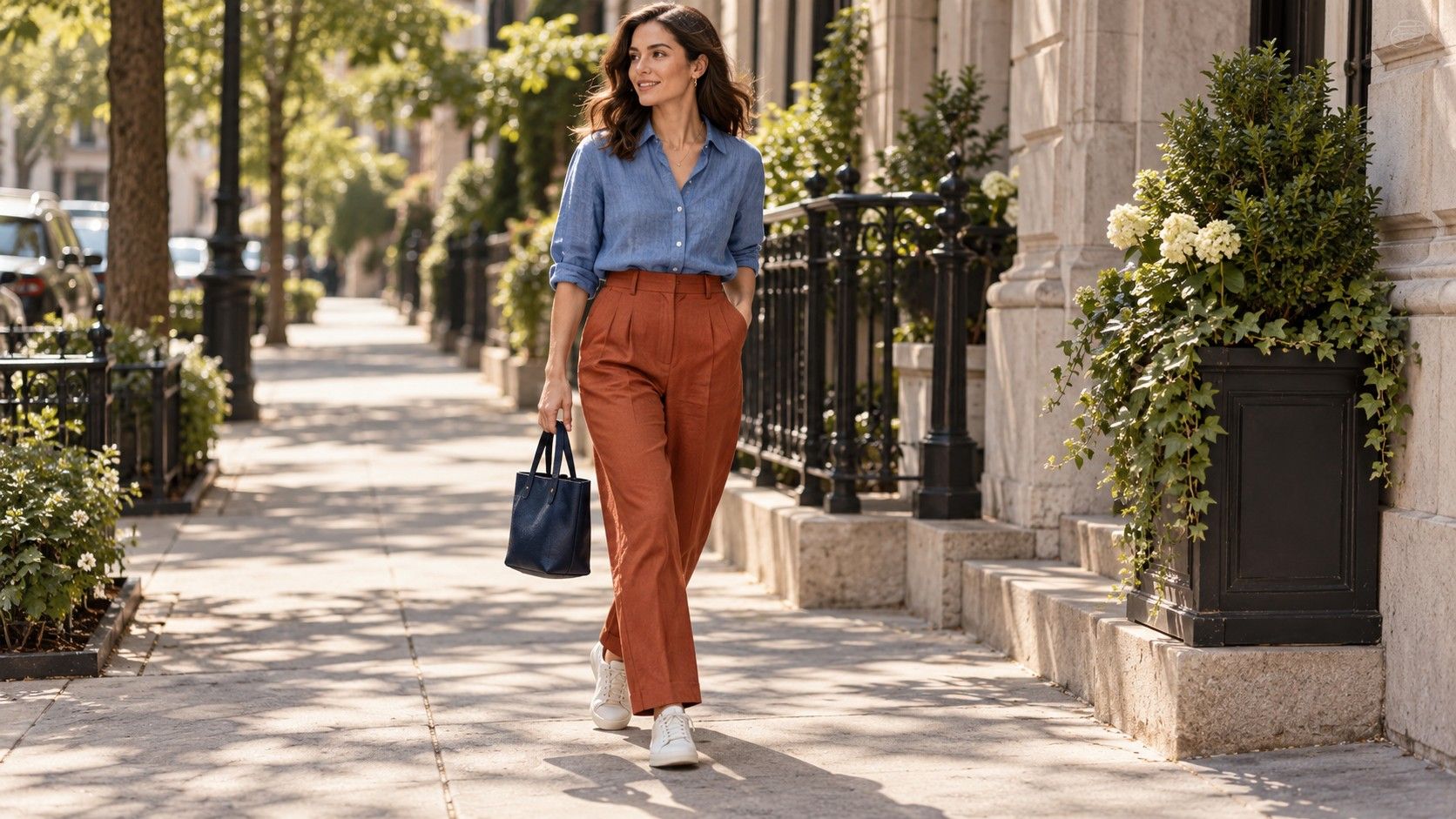
Build three versions using existing clothes: your easiest everyday combination, a quieter version, and a stronger one. For example, a blue shirt might go with faded denim and tan shoes, charcoal trousers and a gray cardigan, then cream trousers and a dark jacket. You can prefer different versions for different days without changing your conclusions about the shirt.
Texture can settle an awkward pairing. A crisp white poplin shirt may create a sharp edge against dark trousers, while a brushed ivory knit feels softer. Check whether the difference you wanted came from color, fabric finish, or both. A note such as “matte cream near the face; dark shoes to anchor the outfit” is more useful than collecting another swatch.
Keep a short record before buying anything new
Use a tiny wardrobe log with the garment, the successful partner, and the condition you tested. “Green knit, charcoal jeans, window light, liked it with the jacket open” is enough. Save a full-length photograph beside the note if that helps you repeat the outfit. There is no need to assign scores to your face or rank every item in the wardrobe.
If you enjoy a color quiz for clothes, use its result to choose the next pair to try. A suggestion of soft colors might lead you to compare dusty rose with a brighter pink you already own. Keep the quiz in a supporting role. Its answers cannot account for every fabric, room, neckline, or personal association that affects what you enjoy wearing.
Before buying a new shade, name two existing pieces that would go with it and check the return policy. Take a familiar top into the fitting room if the store allows it, then inspect the new garment in daylight when you can. Store lighting and a product photograph may give different impressions. Avoid buying several similar colors until you have worn the first one.
Repeat the test only when there is a reason: a different hair color, a new dress code, a seasonal change in the clothes you reach for, or a specific outfit that still feels unresolved. The useful result is a small set of combinations you can recall on a busy morning. If you keep choosing the supposed outsider because you love wearing it, leave it in the wardrobe.