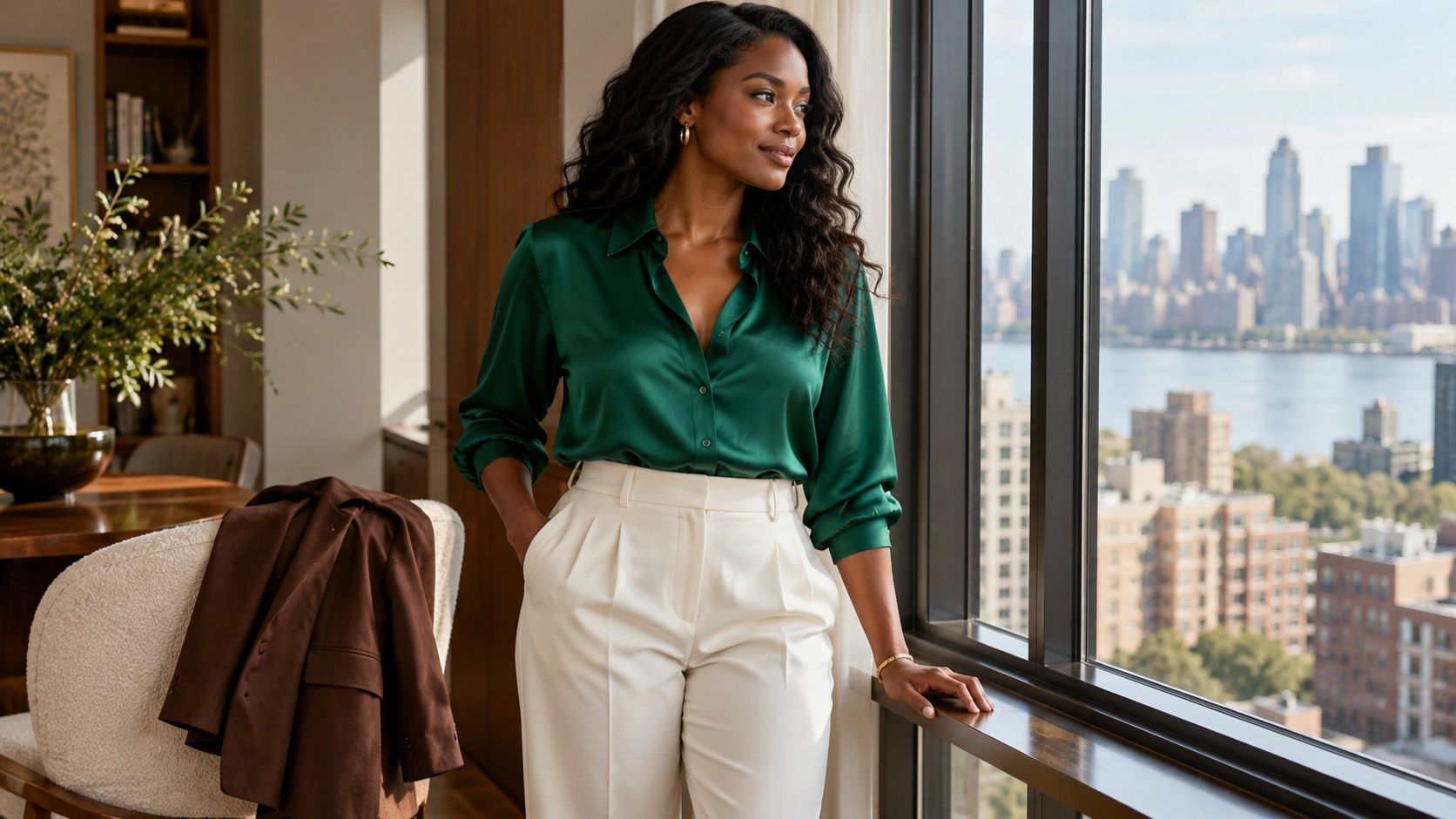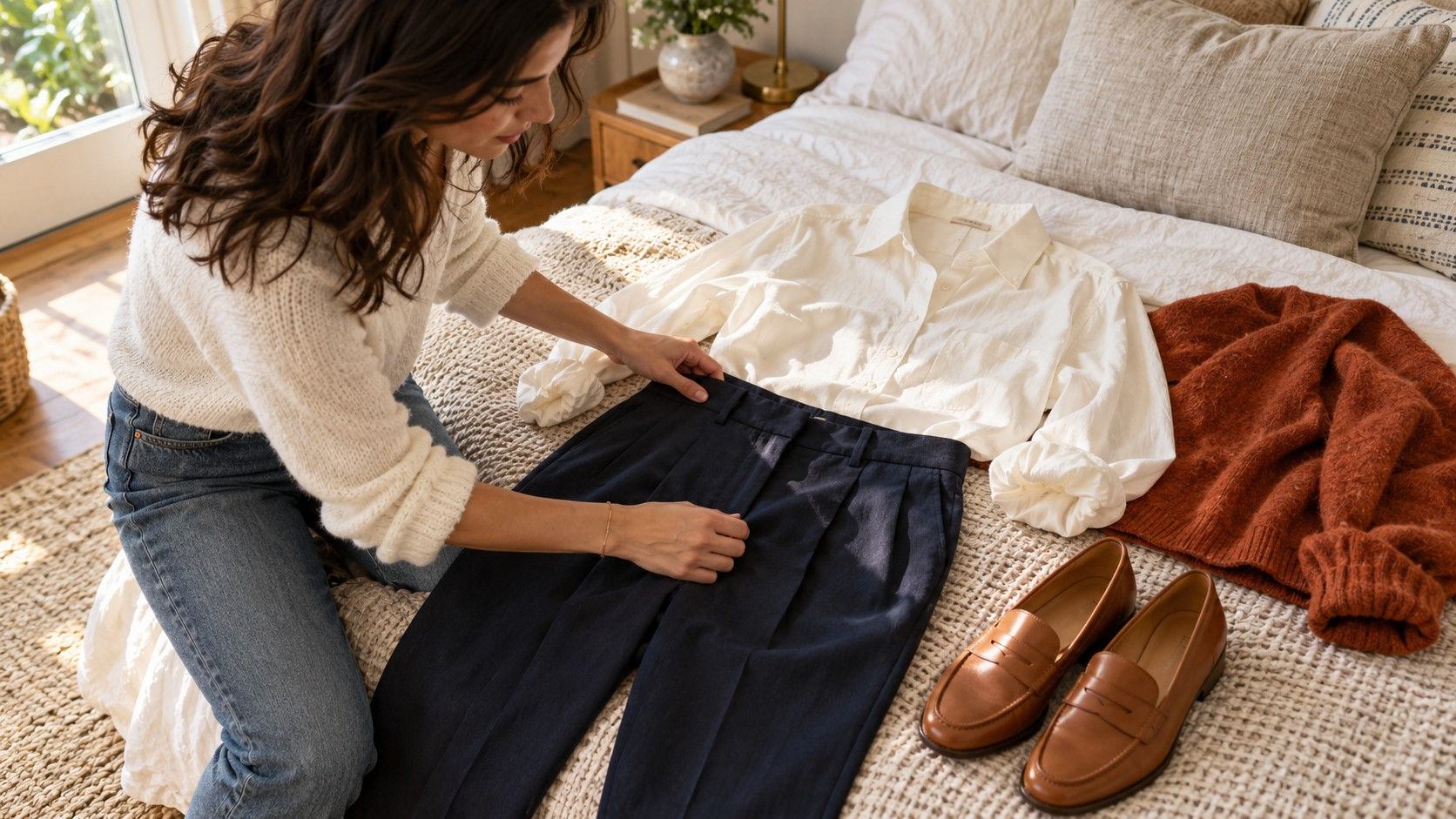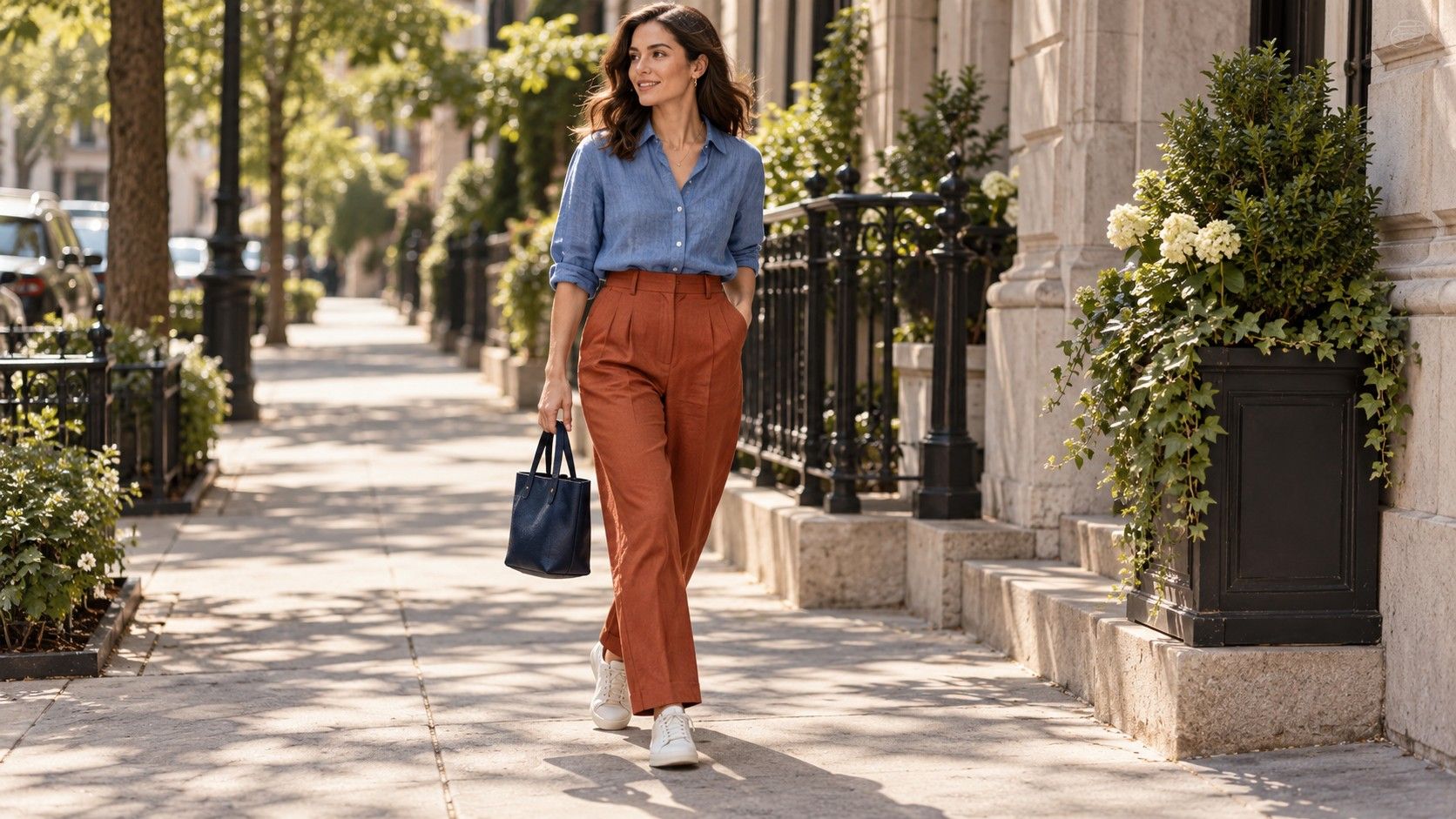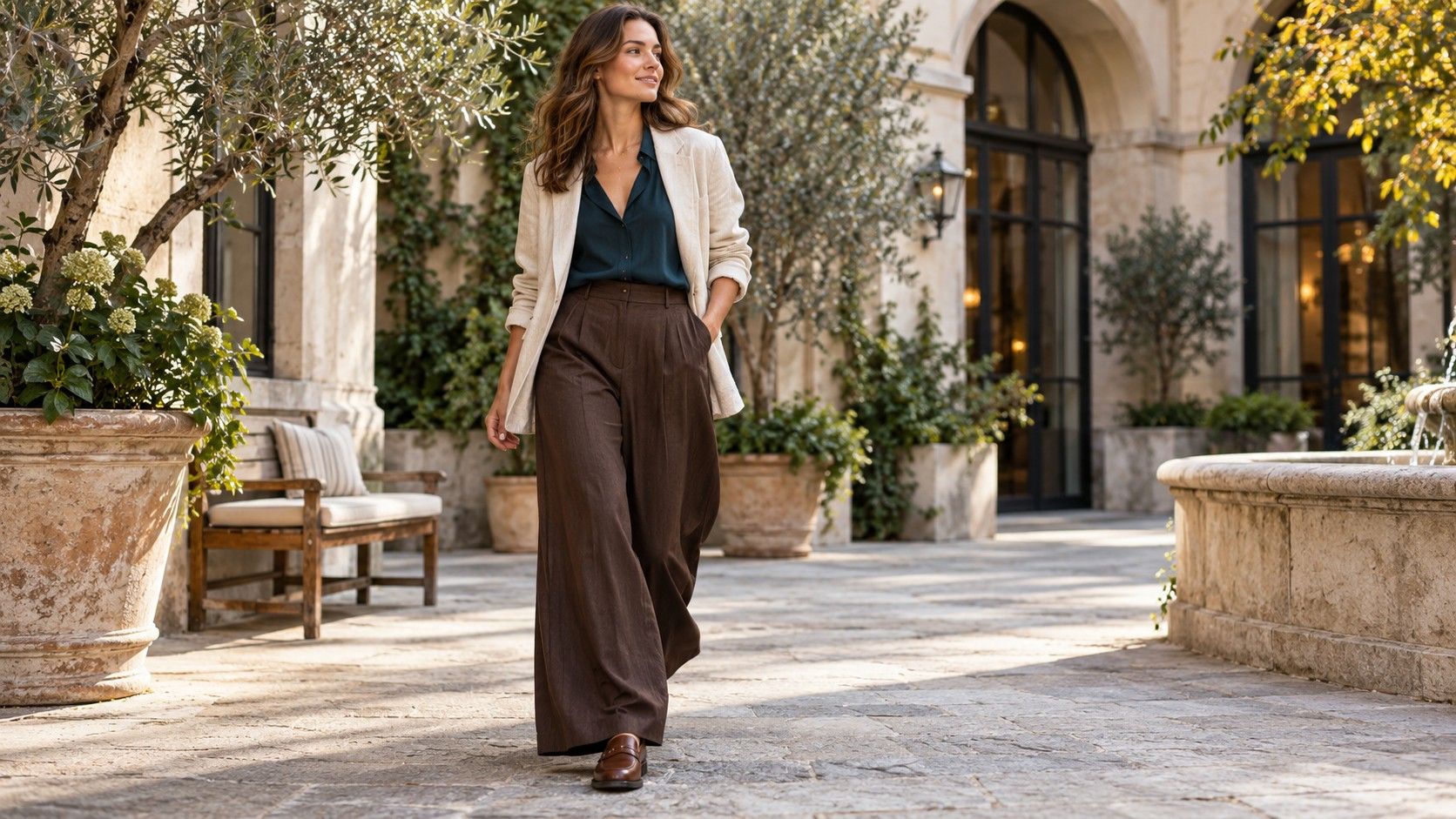
Espresso brown, deep teal, olive, and warm burgundy can make a useful everyday wardrobe. The difficulty comes when every piece is dark, thick, and visually dense: a combination that looked rich on a hanger may feel cumbersome once you add a coat and boots. Deep autumn outfits become easier when you separate color depth from fabric weight. Keep the shades you enjoy, then give them room through a lighter layer, a clearer silhouette, or a change in texture.
Start with one dark piece you actually need to wear
Deep autumn is a seasonal styling label commonly associated with dark, rich colors and a warm tendency. Different systems draw its boundaries differently. It is a flexible way to organize preferences, not a biological category or a rule about who can wear teal. You can borrow the combinations without identifying with the label, and keep favorite colors that fall outside it.
Begin with a garment that suits the day: espresso trousers for the office, a dark olive jacket for a walk, or a burgundy dress for dinner. Lay out the shoes you will really wear, including the pair comfortable enough for your journey. That fixed item gives the outfit a purpose. Choosing five dark colors before considering the weather and your shoes often creates a palette rather than something wearable.
If you are shopping for deep autumn color palette clothing, distinguish depth from warmth and vividness. A nearly black brown is deep; a tan can be warm without being dark. Teal can be dark and fairly clear, or softer and grayer. These qualities help explain why two pieces assigned to the same palette can behave differently together. Look at the actual fabric before trusting its product name.
Give espresso and dark olive a lighter neighbor
Espresso trousers make a practical starting point because they can support several top colors. Try an oatmeal shirt, a muted apricot knit, or a deep teal blouse. The oatmeal creates the clearest light-dark break; the teal keeps more depth. Neither is the correct choice for every person. Consider whether you want a quiet column of color or a more visible division around your waist.
A lighter shade can occupy a small area. Wear a cream shirt under a dark olive cardigan and leave the collar and cuffs visible. The pale edges separate the layers while most of the outfit remains deep. If cream feels too yellow beside the particular knit, compare a less creamy off-white or a soft beige. The name “ivory” on two labels is no guarantee that the fabrics match.
For a largely dark outfit, expose the shape through fit and finish. An espresso knit tucked into a dark brown skirt can work when the skirt is smooth and the knit has visible texture. If both are loose, matte, and nearly identical in depth, their boundaries may disappear. Try a partial tuck or a slightly shorter top before assuming you need a brighter color.
Black can remain part of the wardrobe if you like it. Test black shoes with espresso trousers and a burgundy top, then compare brown shoes. You may prefer the stronger dark edge of black or the quieter connection of brown. A seasonal label is a poor reason to replace useful footwear that already works with your clothes.
Use deep teal or burgundy to avoid an all-brown wardrobe
Dark neutrals are convenient, but an outfit can become monotonous when every purchase is another brown layer. Deep teal offers a distinct color while retaining depth. Try a teal shirt with espresso trousers and a tan belt, or a teal cardigan over a light top with dark denim. Check the teal in daylight: some versions read more blue, others noticeably green.
Burgundy creates a different effect. A warm, wine-colored knit with olive trousers can look rich without needing a patterned scarf or another accent. Compare the two garments directly, since a purple-leaning burgundy and a yellow-green olive give a different relationship from brownish burgundy and gray olive. You may enjoy either; the important part is seeing the combination rather than assigning both to a list.
Do not give every color equal space by default. If the burgundy coat is the piece you want to feature, keep the clothes underneath simpler: espresso trousers and a soft beige knit, for example. If teal and rust compete in large blocks, reduce one to a bag or scarf. A strong accent becomes easier to place when you decide where you want the eye to pause.
| Dark starting piece | Color partner | Way to keep it lighter |
|---|---|---|
| Espresso trousers | Deep teal shirt | Open neckline and a soft beige coat |
| Dark olive jacket | Burgundy knit | Fine knit and straight trousers |
| Chocolate skirt | Muted apricot top | Lighter top tucked at the waist |
| Burgundy dress | Brown shoes | Simple bag and fewer bulky layers |
Keep rich colors in warm weather by changing the fabric
Deep colors do not require winter clothes. For a warm day, an espresso cotton skirt and a teal linen shirt can carry the same color direction as a wool outfit while feeling much lighter to wear. Consider breathability, lining, and garment cut alongside color. A loose dark shirt in a suitable fabric may serve your day better than a pale but tightly fitted synthetic layer.
Fabric weight matters visually as well as physically. A thick ribbed knit, wide corduroy trousers, and heavy boots all add substance. Wearing them together may suit cold weather, but if the effect feels too dense, switch one piece: a fine-gauge knit instead of the thick jumper, smooth trousers instead of corduroy, or a neater shoe when conditions allow. Preserve the warmth and traction you actually need.
For an evening outfit, a small change in finish can provide separation without a pale layer. A satin burgundy blouse with matte espresso trousers catches light differently from a wool knit in the same color. Check it while moving. Shiny fabric can become the strongest element even when the shade is dark, so a simple jacket may be enough around it.
In rain or cold, outerwear often covers the careful outfit underneath. Plan that version too. A dark olive coat with an espresso scarf might merge into one block; a muted rust scarf can make the neckline easier to read. Lay the scarf across the actual coat and put on the bag. A pleasing tabletop arrangement can look crowded once several straps and collars overlap.
Check the whole silhouette before adding another accessory
Stand several steps from the mirror and look at the outline. If the outfit seems heavy at the bottom, notice the trouser width, coat length, and shoe shape before changing colors. Wide trousers and a long loose jacket create more volume than straight trousers with a shorter layer. That volume may be what you want. When it is not, adjusting one proportion is often more effective than adding a pale necklace.
Then examine the light-dark pattern. A cream top under a long open dark jacket makes a narrow vertical light area. The same top worn alone creates a broad pale block. Both use the same colors but distribute them differently. Take two quick reference photos if the distinction is hard to remember; use them for proportions, since phone processing can shift the fabric colors.
Prints can do some of the coordinating for you. A scarf containing olive, rust, and cream can connect an olive coat to brown trousers. Leave enough plain fabric around the print for its colors to read. If you already have a checked coat, a striped knit, and a textured bag, another pattern may add activity rather than solve the original problem.
Build three outfits before expanding the palette
Make one combination for an ordinary workday, one for a relaxed day, and one for an evening. Espresso trousers can appear in all three: with an oatmeal shirt and brown loafers, a teal knit and practical boots, or a burgundy blouse and a simple dark jacket. Repeat pieces freely. The useful test is whether the clothes fit your routine and feel good together.
Inspect the finished combinations near a window, then under the light where you will wear them. Dark colors can look almost identical in a dim hallway and clearly different outdoors. Check that you like the differences rather than expecting a perfect match. Worn denim, brushed wool, and smooth leather have their own surfaces, which can make near-matching shades interesting.
Before buying another rich-colored piece, name the two outfits it will join and the gap it fills. You may need a lighter shirt more than another dark jumper, or a fine cardigan more than another heavy coat. Keep a note of successful combinations with their exact garments. Deep autumn becomes a useful wardrobe direction when the depth remains enjoyable and the clothes stay easy to wear.