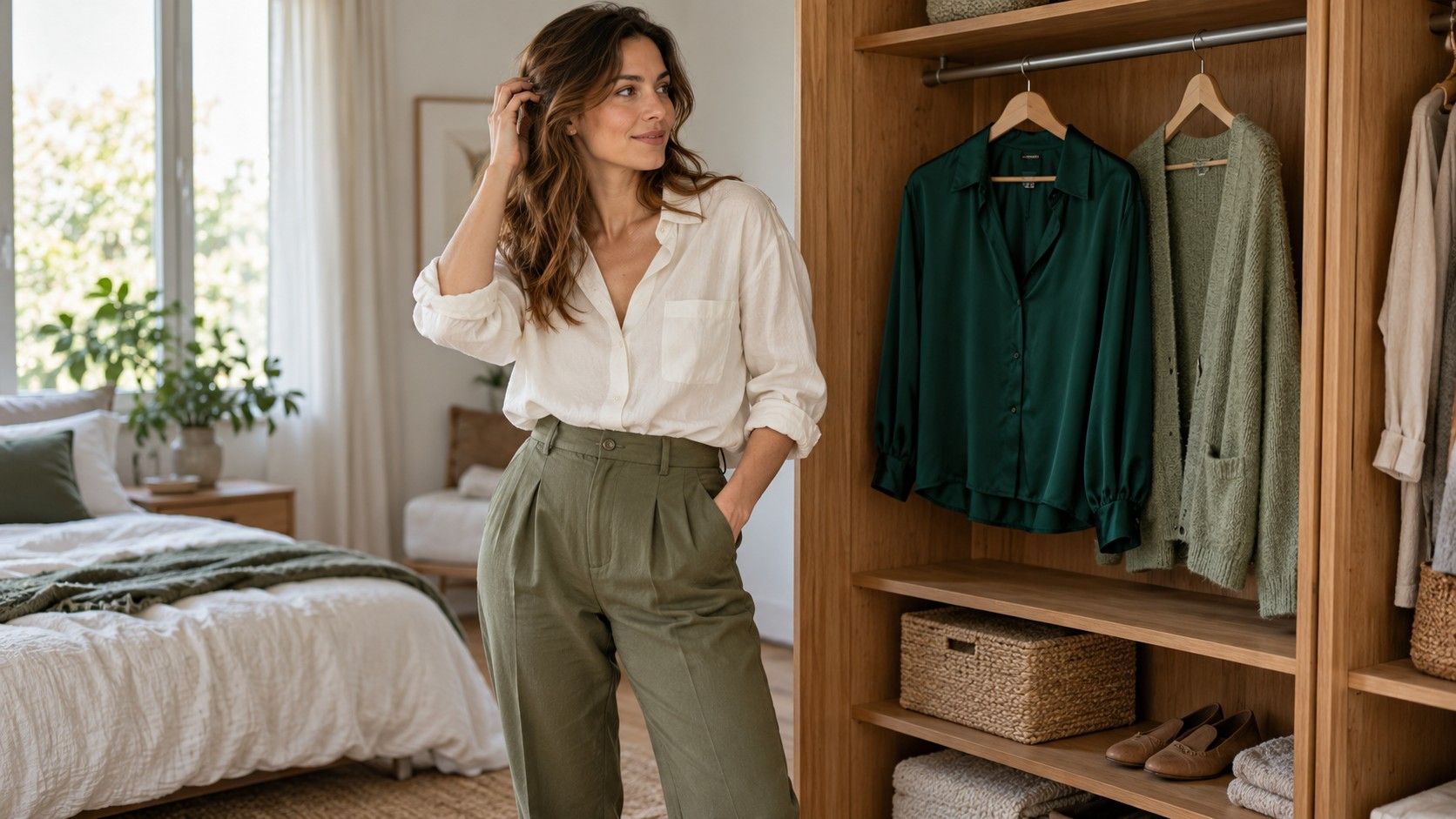
A green garment can be the quietest piece in an outfit or the one you notice first. Olive cargo trousers, an emerald satin blouse, and a pale sage cardigan ask for different partners, even though all three are called green. Start with the actual piece, its depth, and its finish. Then choose the level of contrast you want. A dependable pair of jeans or familiar shoes gives you a useful starting point while you find the combination that fits your day.
Identify the green before choosing its partner
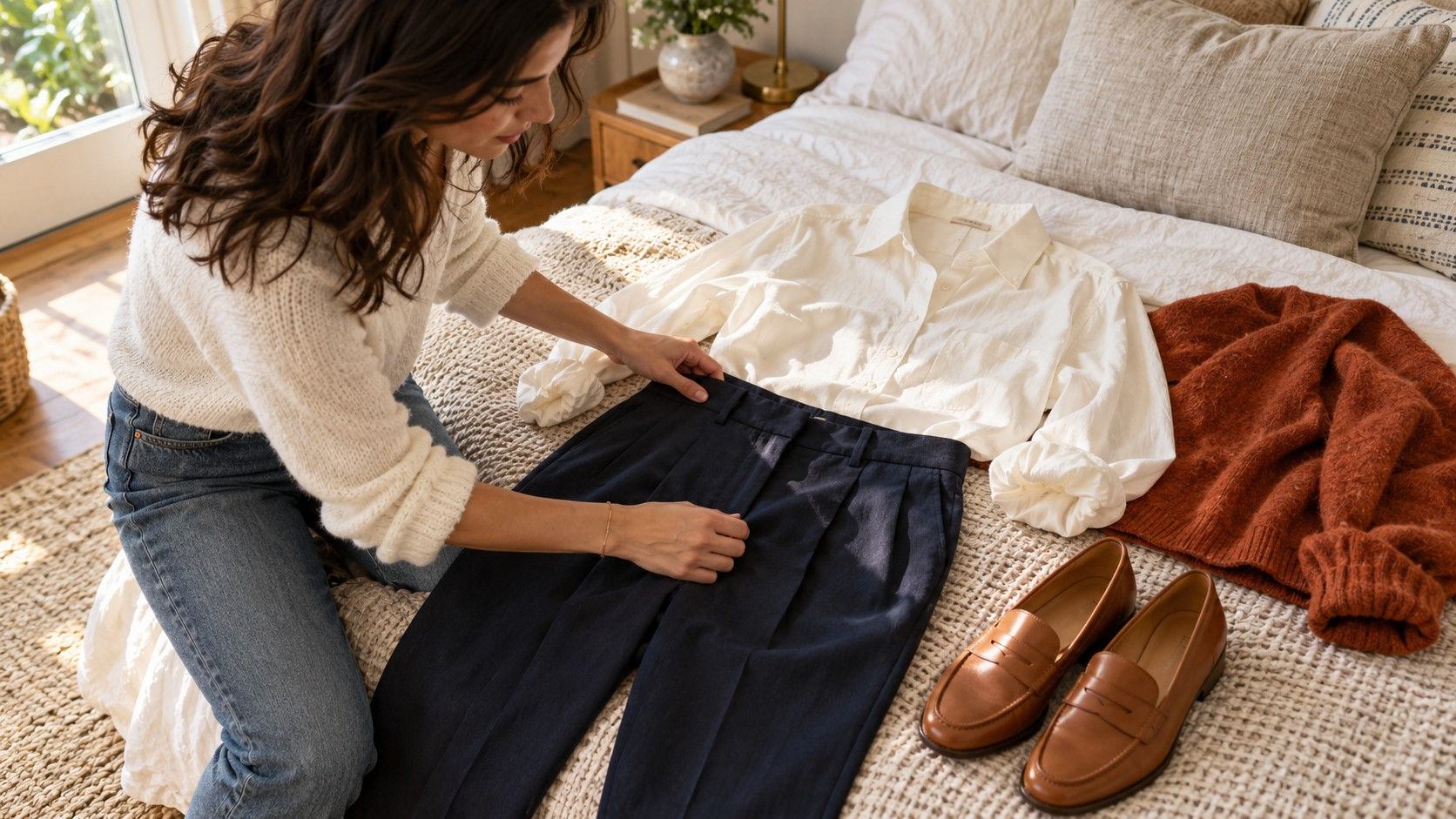
Lay the garment beside something familiar, such as a white shirt or blue jeans, and look at it in indirect daylight. Olive usually suggests an earthy, yellowish green; emerald suggests a richer, clearer green; sage generally suggests a softer gray-green. Retail names are inconsistent, so these descriptions help you compare rather than guarantee what will arrive in a parcel.
Depth changes the choice too. A very dark olive coat can behave like a neutral over many outfits, while pale olive trousers may create more obvious contrast with black. Sage can range from nearly gray to distinctly green. An emerald top might lean blue or yellow and can appear much brighter in a shiny fabric than in matte wool. Hold potential partners together rather than relying on their names.
Decide which item should lead. If you bought a vivid green jacket because you love its color, a white tee and dark denim give it space. If green is your everyday trouser color, a brighter blue shirt or patterned knit can become the focal point instead. Green does not always have to be the accent; the amount of fabric and the surrounding colors determine its role.
Wear olive with denim, cream, and earth colors
Olive is a useful alternative to khaki or dark denim when you want casual trousers with some color. Try olive chinos with a cream T-shirt and brown boots, or an olive skirt with a denim shirt and tan sandals. The differences in fabric keep the outfit from looking like a uniform. For cooler weather, a dark navy coat can sit comfortably over either base.
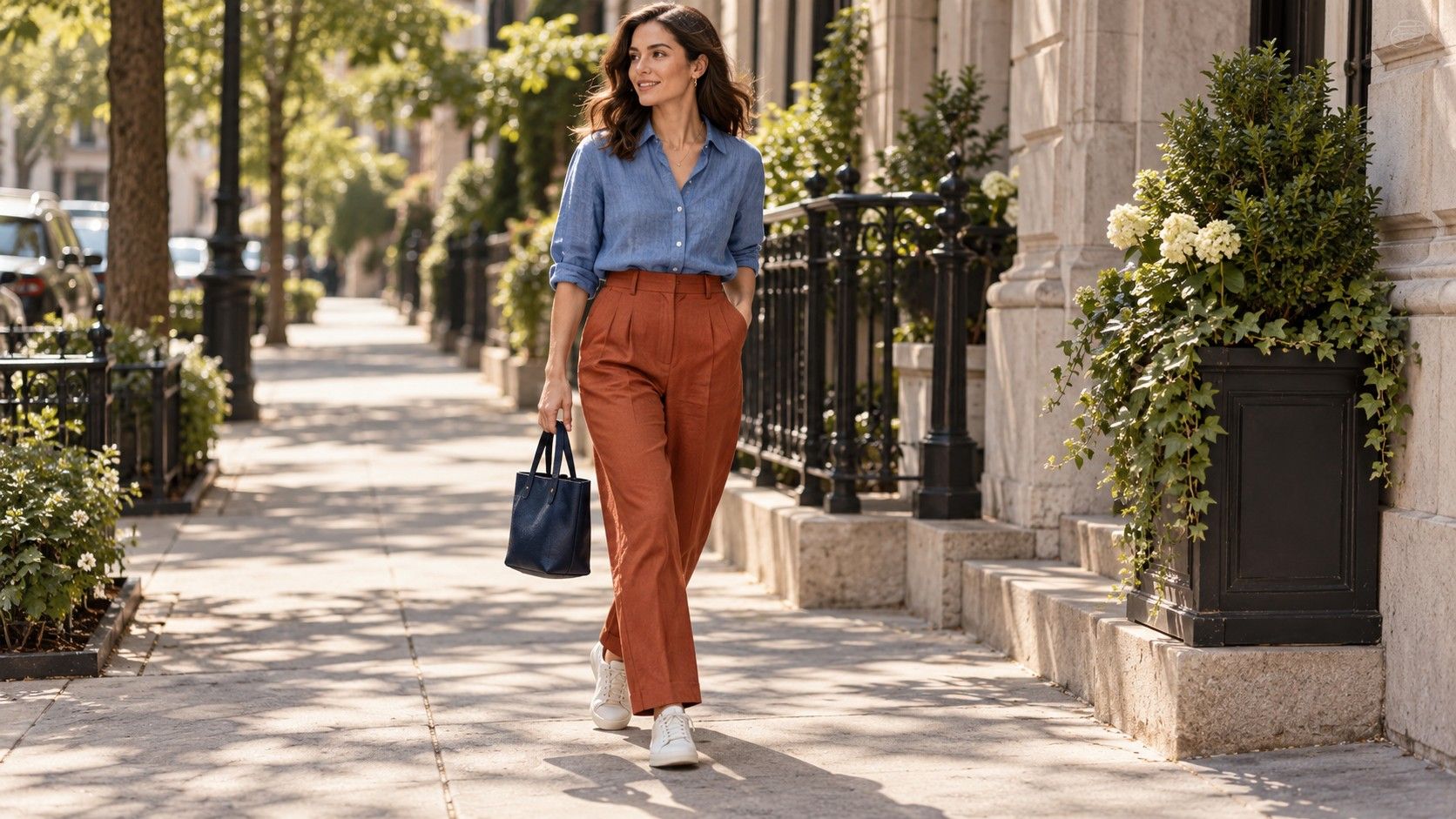
Brown and rust offer an earthier direction. A chocolate sweater with olive trousers creates a relatively quiet combination, especially when both fabrics are matte. A rust shirt adds more separation. Check the two pieces in daylight because a yellowish olive and a greenish brown can look closer than expected. If they merge in a way you dislike, change one piece to a clearly lighter or darker shade.
Black produces a firmer outline. An olive overshirt worn open over a black tee and black jeans is an easy way to keep several casual pieces coordinated. White sneakers can add a light break at the bottom, while dark boots keep the line more continuous. Neither shoe choice is required; consider the weather and how much visual contrast you want.
Avoid assuming that several olives will match. An army-green jacket and gray-olive trousers may be good together, but a tiny mismatch can also look unintentional. Make their difference obvious through depth or texture, or separate them with a contrasting top. A near-match is easier to judge with both garments on than by holding two cuffs together.
Give emerald a clear base for work or evening
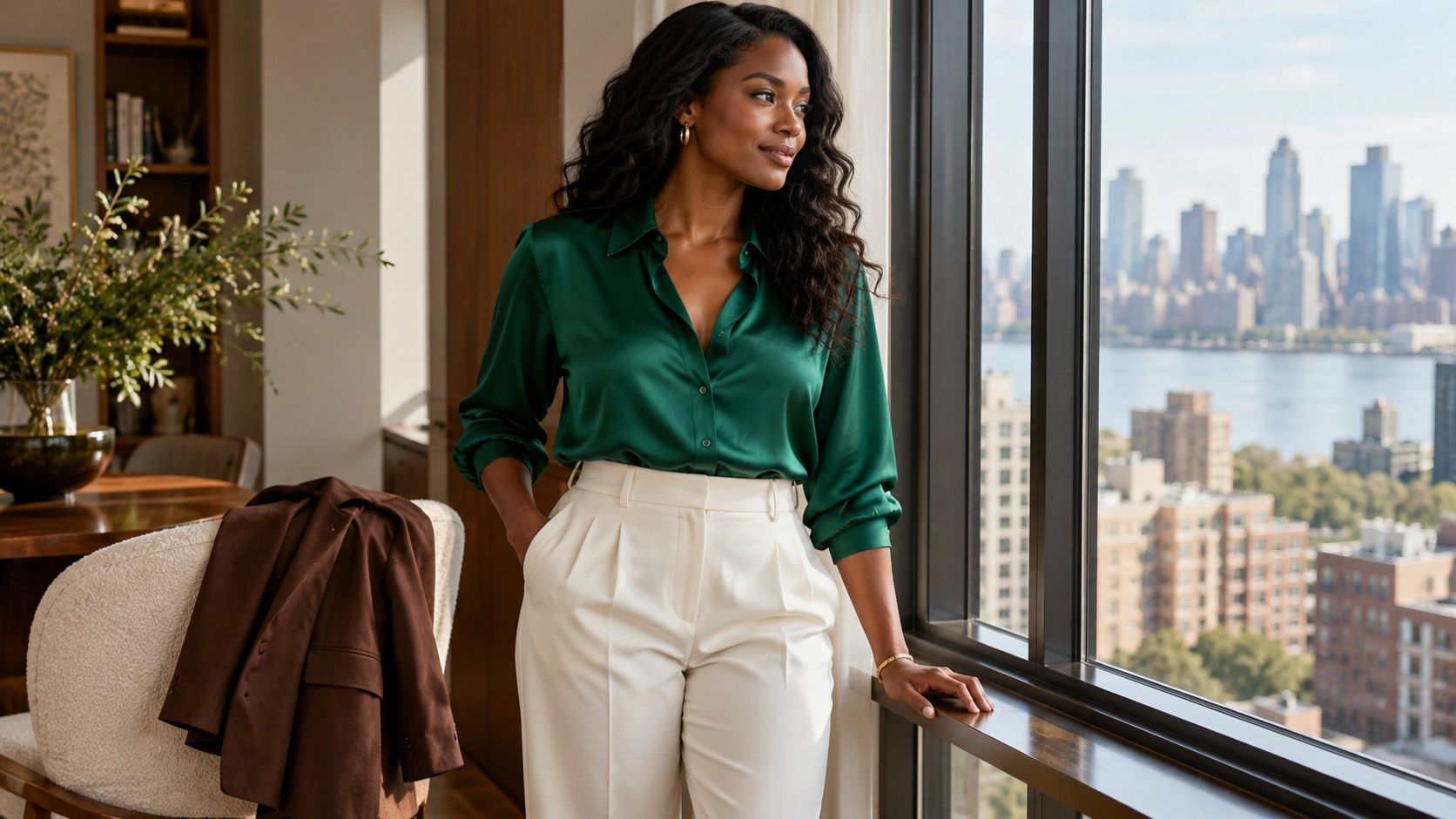
An emerald blouse with navy trousers offers a substantial color combination without relying on black. Choose a matte blouse for a quieter work outfit, then compare a satin version if you want more shine for dinner. Charcoal is another useful base, and cream creates a lighter, more distinct contrast. The green remains prominent in each, but the overall mood changes.
For an emerald dress, choose shoes according to the setting and the dress's finish. Black loafers can make a simple knit dress feel grounded; metallic sandals may suit an evening event; brown flats can make a relaxed dress feel more casual. A metallic bag or shoe is an optional accent, not something green requires. Test the outfit with your actual jacket before choosing the accessories.
Pink can be an appealing partner when you want two visible colors. Try a muted rose cardigan over an emerald top, or a small pink print on a scarf beside a green jacket. Clear hot pink creates a stronger effect than dusty rose. If the pairing feels too busy, reduce the area of one color rather than assuming the combination is wrong.
Rich green and red can feel deliberately festive when both are bright and occupy large areas. You may want that association. For a less seasonal impression, try burgundy rather than clear red, or use the red as a small accessory beside a navy base. Shade and proportion do more work here than a blanket rule about colors that must never meet.
Keep sage distinct with soft contrast or a darker anchor
Sage works easily with light neutrals when you want a gentle outfit: a sage linen shirt with ecru trousers, a sage cardigan over a white tee, or a gray-green skirt with a light gray knit. Check the actual whites beside the green. A yellowish cream may make the combination warmer, while a cooler soft white can give it a different balance.
If the light pieces seem too similar, add one dark anchor. Navy trousers under a sage top define the lower half clearly; charcoal shoes and a gray bag can give an otherwise pale outfit a little structure. You do not need several dark accessories. One well-placed difference may be enough to make the arrangement feel finished.
Blue denim is a useful middle ground. Medium blue jeans with a sage sweatshirt feel casual without the sharp contrast of black, and a denim jacket can play the same role over a sage dress. Faded denim tends to look softer than uniformly dark denim, so compare them if the green seems overwhelmed. Fit and fabric weight matter as well: a heavy jacket can dominate a delicate dress even when the colors cooperate.
For a warmer pairing, try soft tan or muted peach. Start with a small area, such as a tan belt or peach scarf, before buying a second large garment. When two muted colors look dull together to your eye, a clearer white inner layer or a deeper brown shoe can provide separation.
Use shoes and accessories to finish the whole outfit
When deciding what colours go with green clothes, look at the shoes already by your door. Their color can often link the outfit without matching the green. Brown boots repeat the earthy character of olive, black shoes can anchor emerald, and pale sneakers can keep sage casual. These are convenient starting points rather than exclusive pairings.
| Green garment | First outfit to try | A useful second direction |
|---|---|---|
| Olive trousers | Cream tee, denim jacket, brown boots | Black knit and black loafers |
| Emerald blouse | Navy trousers and dark shoes | Cream skirt and a simple metallic accessory |
| Sage cardigan | White tee, medium blue jeans, pale sneakers | Charcoal trousers and brown flats |
| Dark green coat | Gray knit, dark denim, black boots | Soft pink scarf over a navy base |
Belts and bags need not be identical to the shoes. Similar dark browns can create a calm connection without an exact match, while a black bag can work with brown boots when the rest of the outfit supports both. Inspect the overall balance before adding another accent. If the jacket, scarf, bag, and shoes all compete, remove one accessory and reassess.
Patterns can do some of the coordination for you. A scarf containing green and navy connects an emerald top to navy trousers even if the greens differ slightly. Keep the scale of the pattern in mind: a fine print may read as a blended color from a distance, while broad checks remain separate blocks.
Test the combination before buying another piece
Put the outfit on with its outer layer and walk a few steps away from the mirror. Check the green both with the jacket open and closed. A shirt that looked balanced on its own may leave only a small bright triangle at the collar beneath a coat. That might be pleasing, but it is a different outfit from the one you first assembled.
Examine texture under the light where you will wear it. Emerald satin can develop bright highlights and dark folds, while brushed olive cotton looks more even. Sage linen may appear slightly different wherever it creases. A screen photograph records the general combination, but automatic white balance makes it unreliable for settling subtle shade differences.
Before adding another green item, name two outfits it would complete from your existing wardrobe. If olive trousers already work with cream, denim blue, and black, you may need no special new top at all. Save the combinations that worked, including the shoes and coat. The next time you reach for green, you will have a complete outfit to repeat rather than another color puzzle.