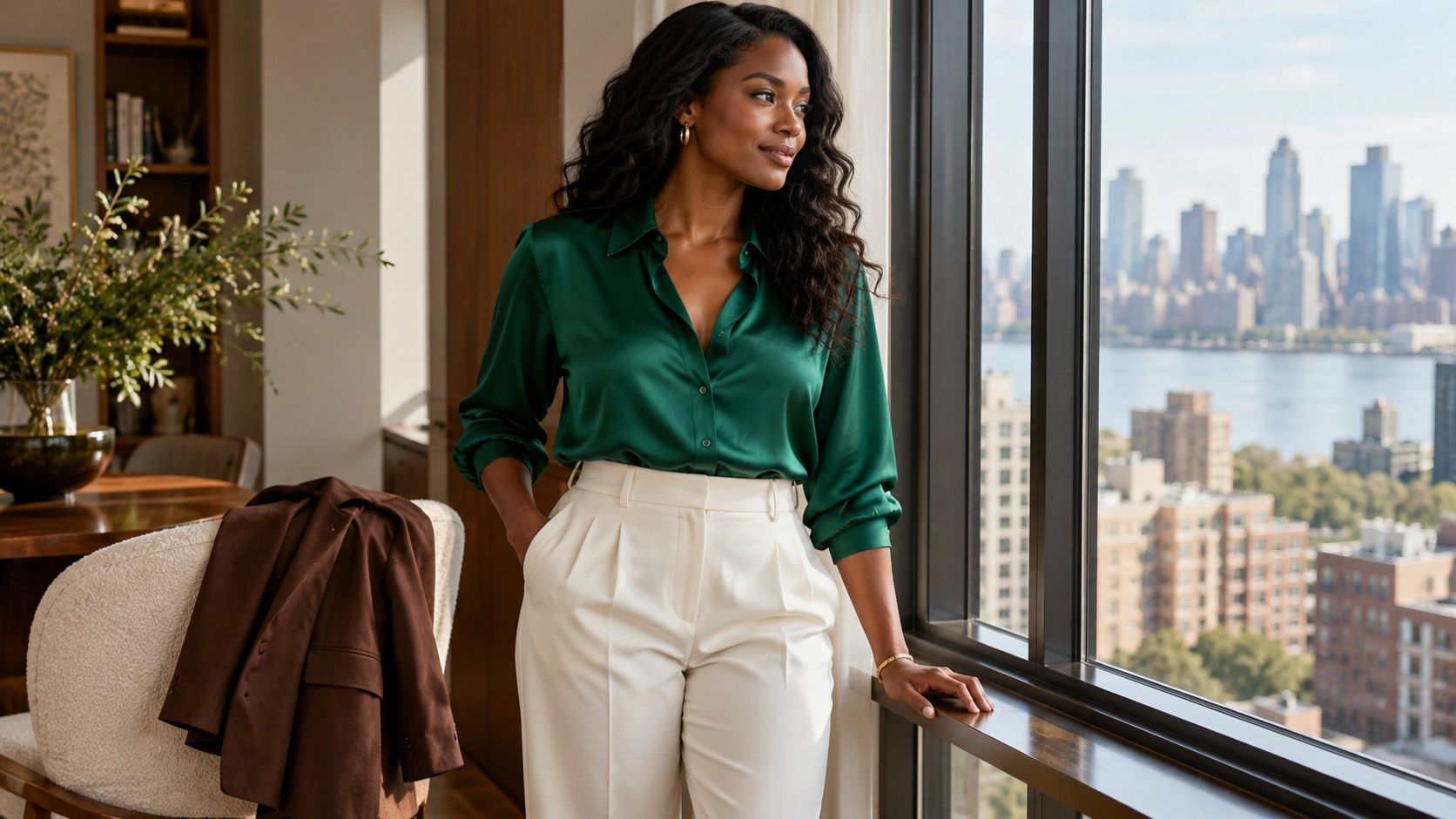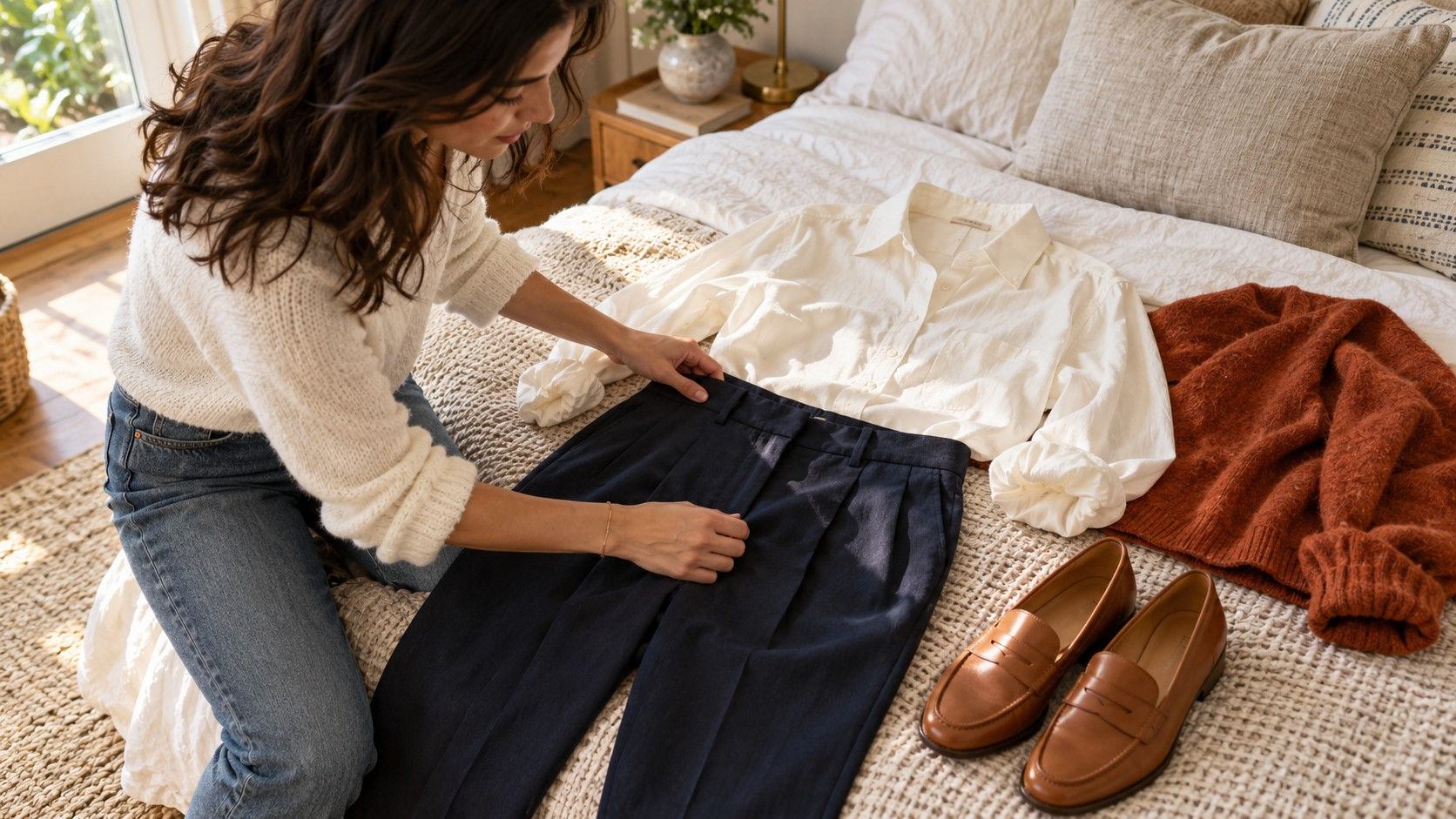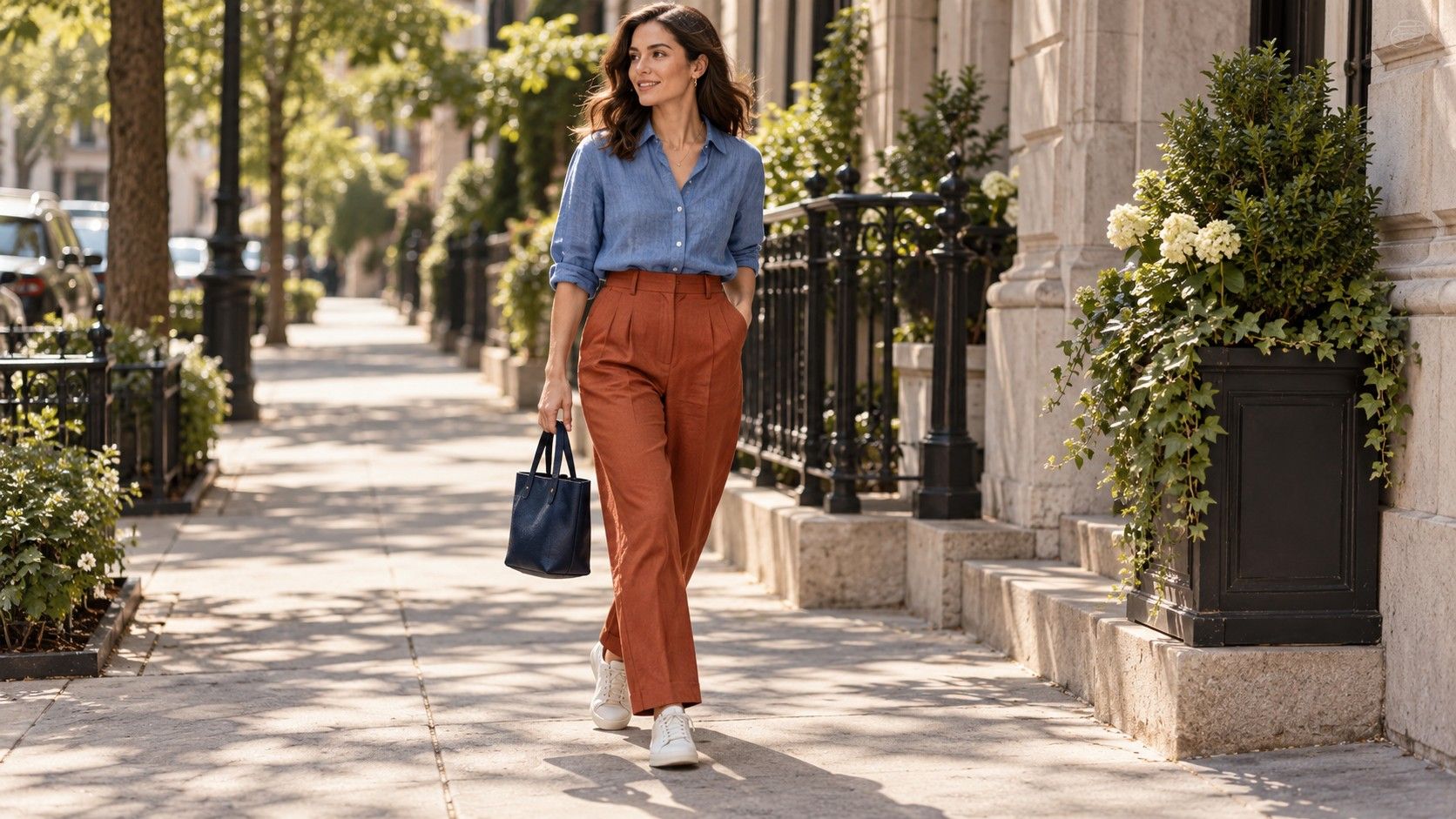
A useful wardrobe palette makes an ordinary morning easier: the trousers are clean, two shirts work with them, and the shoes already suit the plan. It does not need to identify your one correct seasonal category or limit you to gray and blue. Start with the clothes you actually wear, then connect them through a few repeatable combinations. Once the everyday pieces cooperate, an unusual shirt or brighter knit becomes much easier to enjoy.
Start with the trousers you wear during a normal week
Take out three pairs you use regularly. They might be navy trousers for work, dark jeans for evenings, and olive chinos for weekends. If your routine is different, use your own equivalents. There is little value in designing a palette around tailored charcoal trousers if you spend most days in relaxed workwear or sports clothes.
Check the actual colors in daylight. Navy can lean purplish, greenish, or nearly black; dark denim may have obvious fading; olive ranges from yellowish khaki to gray-green. Lay the pieces beside each other so you can see where they overlap. If two pairs serve the same purpose and color role, that is useful information before buying a third.
Choose one dark base and one lighter or more colored alternative if you are starting from very little. Navy and stone, charcoal and olive, or dark denim and tan give you visibly different options. They are examples rather than a shopping requirement. Black trousers can be the main base if that is what you enjoy and already wear.
Include weather and care in this first decision. Light trousers that you avoid on a wet commute will not carry the weekly wardrobe, however good they look with your shirts. A dependable palette grows out of repeated use, so begin with the pieces that survive your actual schedule.
Give each pair two reliable shirts
For navy trousers, try a pale blue shirt and a soft white shirt as two different starting points. Pale blue makes a quieter contrast, while white creates a clearer break. A gray tee or knit can provide a more casual option. Choose the collar and fabric for the setting: a crisp woven shirt and a jersey tee do different jobs even in the same color.
With olive chinos, cream, denim blue, and navy are useful comparisons. A cream tee with an open blue overshirt makes a relaxed weekend outfit; a pale blue button-down can work when you want a neater version. With charcoal trousers, try white, muted pink, or burgundy. Let one familiar pair of trousers hold the experiment steady while you compare the tops.
There is no special rule that prevents men from wearing pink, purple, or vivid color. If you like a pale pink shirt, assess its fit, transparency, and compatibility with your jackets just as you would a blue one. The practical issue is whether it makes outfits you want to wear, not whether a color has been assigned a gender.
Check shirts with the jacket fastened and open. A striped shirt may look restrained under a jacket but become the main visual element when the jacket comes off. If you spend most of the day without the outer layer, judge that version carefully. Buying for a complete outfit means considering both arrangements.
Use one accent to expand several outfits
A color palette for men's clothes becomes easier to repeat when one accent works across several bases. Burgundy knitwear can accompany navy trousers, dark denim, and charcoal. Forest green can work with stone chinos and blue jeans. Rust can add warmth to navy or olive. Compare the exact garments before treating any of these as a guarantee.
Choose an accent in a piece you will actually use. If you never wear scarves, buying one is a poor way to introduce color. A sweater, polo, overshirt, or everyday T-shirt may earn far more wear. A small accessory is useful when you enjoy it, but it need not be a compulsory first step before wearing a colored shirt.
Keep the first trial simple. Wear a burgundy sweater with navy trousers and familiar dark shoes, then try it with jeans at the weekend. Once both combinations feel comfortable, you have gained two outfits from one item. Adding several unrelated accents at once makes it harder to see which purchase is doing useful work.
Intensity matters alongside color family. A muted blue-green knit has a different presence from a bright turquoise polo. If a clear shade feels louder than you want, try a softer or deeper version. If the softer version seems dull, use a lighter shirt beneath it or choose the brighter one deliberately. There is no need to aim for maximum subtlety on every occasion.
Let shoes and leather accessories support the base
Bring your usual shoes into the plan early. Navy trousers with brown loafers create one dependable route; charcoal trousers with black shoes create another; dark denim with pale sneakers can handle casual days. These are common combinations because they are easy to assemble, not because the alternatives are wrong. Black shoes can work with navy, and brown shoes can work with charcoal.
In a more formal outfit, a belt in a broadly similar color and finish to the shoes often looks calm and deliberate. Exact dye matching is rarely necessary for an everyday outfit. Compare a dark brown belt and brown shoes as a whole, then consider whether a very red-brown belt looks unexpectedly separate. Your eye can settle that more usefully than a rigid rule.
Do not let a watch strap determine every other choice. A small brown leather strap can coexist with black footwear, particularly in a casual outfit. The amount of visible material matters. A large tan bag occupies much more space and may deserve more attention, but even there coordination can come from the coat or trousers rather than the shoes alone.
For wet or cold conditions, build around the boots you need. Put the boots beside the trousers, choose a shirt or knit, then add the coat. A palette should accommodate practical footwear. Buying delicate shoes purely to complete a color scheme is unlikely to help when you reach for weatherproof boots every morning.
Repeat combinations while changing texture and contrast
Outfit repetition is a benefit of a working palette. A blue shirt with navy trousers can return in several forms: crisp cotton for a meeting, brushed cotton for a relaxed office, or an open overshirt over a tee for the weekend. The broad colors stay familiar while texture and layering change the effect.
Watch near-matching dark pieces. A navy jacket with slightly different navy trousers may look intentional if their textures and depths are clearly distinct, or slightly accidental if they almost resemble a suit. If you want the uniform effect of a suit, use coordinated pieces. If you want separates, make the difference visible with gray, stone, denim, or a deliberately contrasting fabric.
| Base | First repeatable outfit | Second version |
|---|---|---|
| Navy trousers | Pale blue shirt and brown loafers | Burgundy knit and dark boots |
| Charcoal trousers | Soft white shirt and black shoes | Muted pink shirt with a dark cardigan |
| Dark jeans | Gray tee, navy overshirt, pale sneakers | Forest-green sweater and brown boots |
| Olive chinos | Cream tee and a denim jacket | Navy polo with dark casual shoes |
Adjust the contrast to your taste. White against dark navy is more distinct than medium blue against navy. A pale knit under a dark jacket breaks up the torso; similar dark layers create a more continuous line. Your skin and hair may influence which effect you prefer, but they do not establish a rule that overrides your choice.
Prints can link existing pieces too. A fine blue stripe on white offers an easy partner for navy trousers, and a small check containing burgundy can repeat a favorite sweater color. Start with one patterned garment if you want a straightforward result. Add another pattern when you enjoy how their scale and spacing work together.
Buy for a missing outfit rather than a missing color
Before shopping, identify the gap in plain terms: perhaps you have two work trousers but only one shirt that fits, or a useful green sweater with no comfortable layer beneath it. That description leads to a more focused purchase than deciding your wardrobe lacks a fashionable color. Take a photo of the existing pieces as a reminder, while allowing for screen color differences.
Try a possible purchase with two bottoms and your usual coat. Check the collar, sleeves, and fit when you sit down. Under strongly warm shop lighting, subtle gray and cream shades may be difficult to compare; an at-home test can help if the return conditions make it practical. Read those conditions before ordering several versions.
Keep a short record of combinations you actually wore. “Navy trousers, blue shirt, brown loafers” is enough; add the jacket when it matters. After a few weeks, the repeated colors will show you the palette you use. Keep those connections, replace worn pieces thoughtfully, and leave room for an occasional color chosen simply because you like it.