Shopping advice for olive skin can become contradictory very quickly. One chart recommends warm earth tones; another rules them out. Neither has seen the actual green sweater under your chin, your favorite jeans, or the light in your bedroom. Olive is a description people use for a complexion that can appear somewhat greenish or grayish, rather than a complete wardrobe prescription. A useful approach starts with comparing garments, then building an outfit you want to wear. The aim is to find pleasing combinations without turning getting dressed into a test you can fail.
When every olive-skin palette seems to disagree
People who describe themselves as olive can have different skin depths, hair colors, and preferences. Some find muted clothing comfortable beside their face; others prefer clean, saturated color. A complexion may also look different across daylight, warm lamps, and a phone screen. That leaves plenty of room for two people using the same label to choose very different shirts.
Separate three questions before buying anything: does the garment's color lean yellow or blue compared with a similar shade, how light or dark is it, and how clear or dusty does it look? These are practical comparisons, not a diagnosis. A dark forest-green shirt and a light sage blouse may both be called green but produce quite different effects. If sage seems too pale, that does not prove that green is wrong for you.
I find it more useful to describe the specific problem than to blame the whole color family. Perhaps a beige collar blends into the face more than you like, or a brilliant white shirt feels abrupt beside your hair. Write that down in ordinary language. “Try deeper beige” gives you something to check in the next fitting room; “my skin cannot wear neutrals” closes off options unnecessarily.
Compare two tops beside a window before choosing a winner
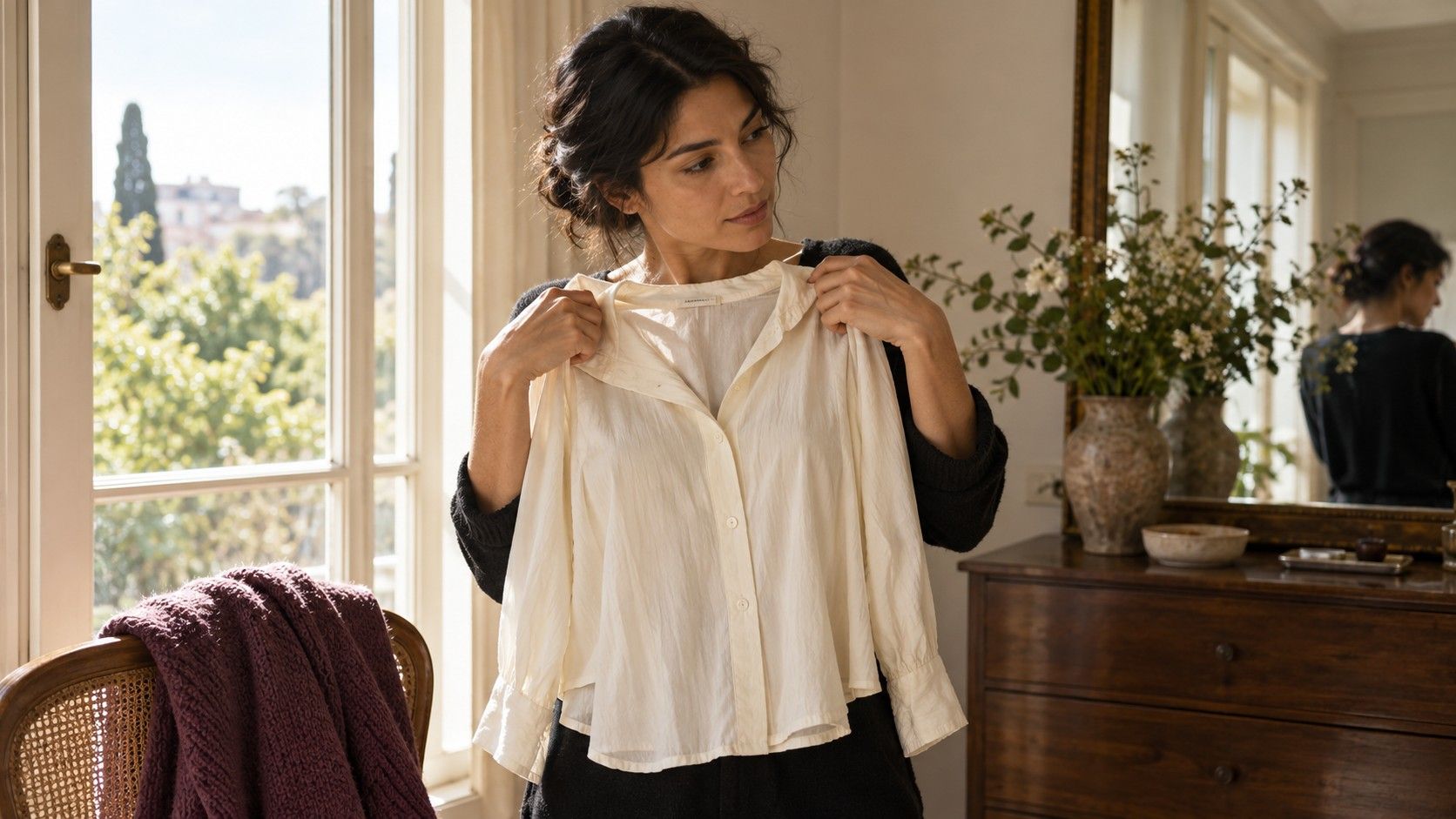
Begin with a top you already enjoy and one uncertain garment. Stand in indirect daylight, with both pieces held at the same height below your chin. Keep your position, hairstyle, and makeup consistent during the comparison. Strong sunlight creates shadows, while a colored wall can complicate what you see. You do not need perfect studio conditions; you need conditions that stay reasonably similar.
Look at the whole impression rather than searching for supposed imperfections. Does your face remain easy to notice, or is the shirt the first thing you see? Do you enjoy the contrast at the neckline? Is the color pleasant with your hair? None of these questions has an objectively correct answer. A vivid top may be exactly what you want for dinner and more attention than you want during a work call.
Use a second comparison if the first result surprises you. Swap cream for a less yellow off-white, bright pink for berry, or khaki for a gray-green. Changing one quality at a time helps. Changing color, neckline, fabric, and lighting together makes it difficult to know what influenced your preference. Put off an expensive purchase if you can only inspect it beneath a fitting room's strongly warm spotlights.
Find neutrals that work with your actual trousers and shoes
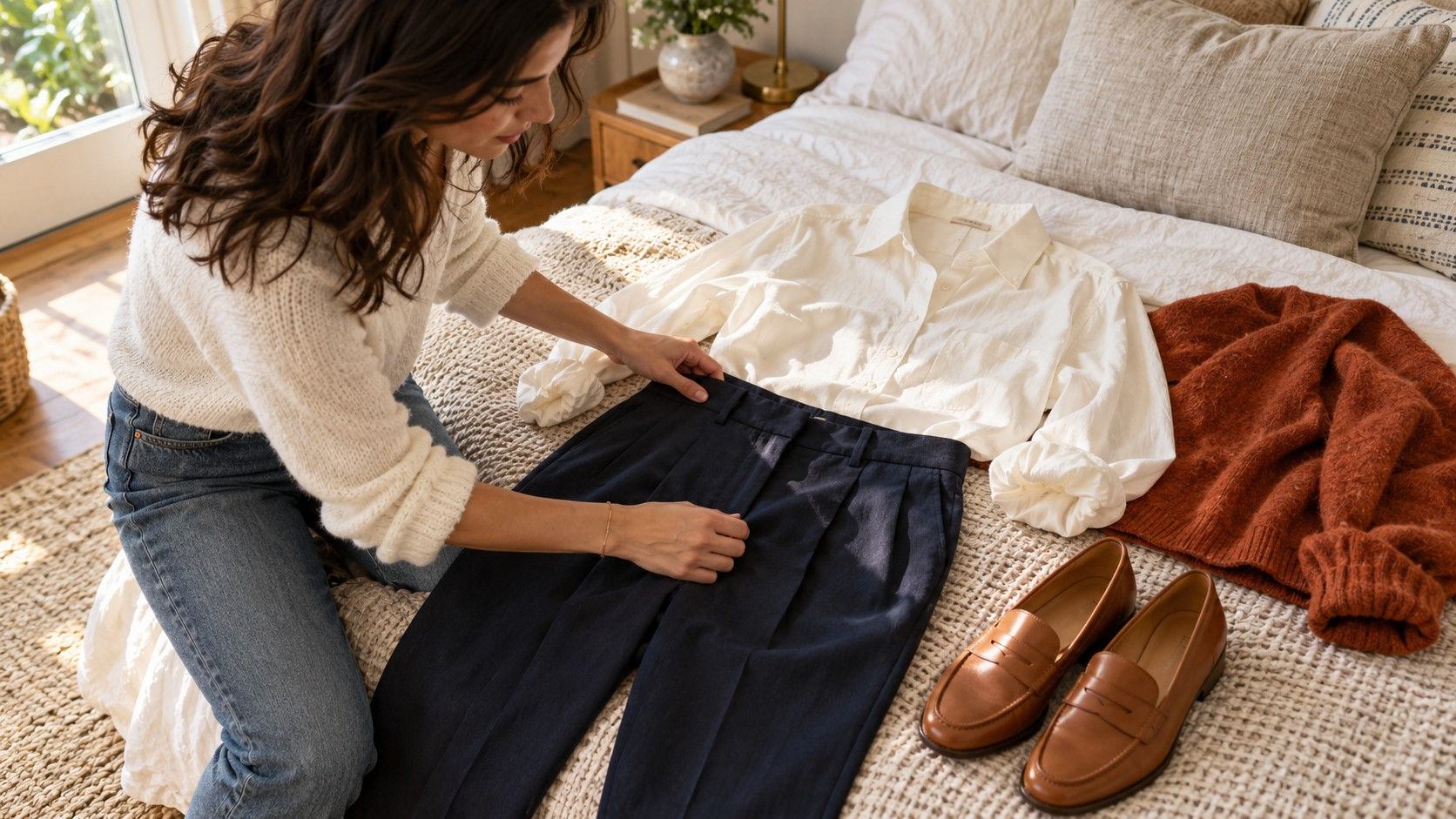
The best clothing colors for olive skin tone are useful only if they make sense in your wardrobe. Take out the bottoms you wear most: perhaps dark denim, black trousers, and a tan skirt. Test possible tops against those pieces before deciding that a particular neutral deserves a place in your closet. A flattering blouse that needs different shoes and a new coat may be a poor everyday purchase.
Navy, charcoal, chocolate, soft white, and stone are sensible starting points for comparison. They are options, not an approved list. A slightly greenish taupe can behave differently from a pinkish taupe even when both carry the same label. Examine the fabric rather than trusting the color name on a product page. A close-up photograph may help you assess texture, but a screen cannot reliably settle a subtle cream-versus-white decision.
| If this combination feels awkward | Try this small change | What to compare |
|---|---|---|
| Tan trousers and a yellow cream top | A neutral off-white or navy top | Whether the neckline feels clearer to you |
| Black trousers and brilliant white | Soft white, stone, or a textured gray | Whether you prefer less light-dark contrast |
| Khaki trousers and a similar olive shirt | A deep plum or denim-blue shirt | Whether separating the colors improves the outfit |
| Dark denim and a pale beige sweater | Chocolate, teal, or a deeper beige | Whether more color depth feels balanced |
Keep the trial small. One successful neutral top can link three bottoms, while four unrelated “perfect palette” purchases may offer fewer complete outfits. Shoes need not match your complexion or your top. They simply need to look intentional with the clothes and suit the walking, weather, and setting ahead.
Choose an accent color by the mood of the outfit
For an ordinary workday, try a dark teal knit with charcoal trousers, or a berry blouse under a navy jacket. These combinations offer color without making every piece compete. If you want something quieter, compare dusty rose, muted blue, and aubergine against the same trousers. The winning shade is the one whose effect you enjoy and whose fabric works for your day.
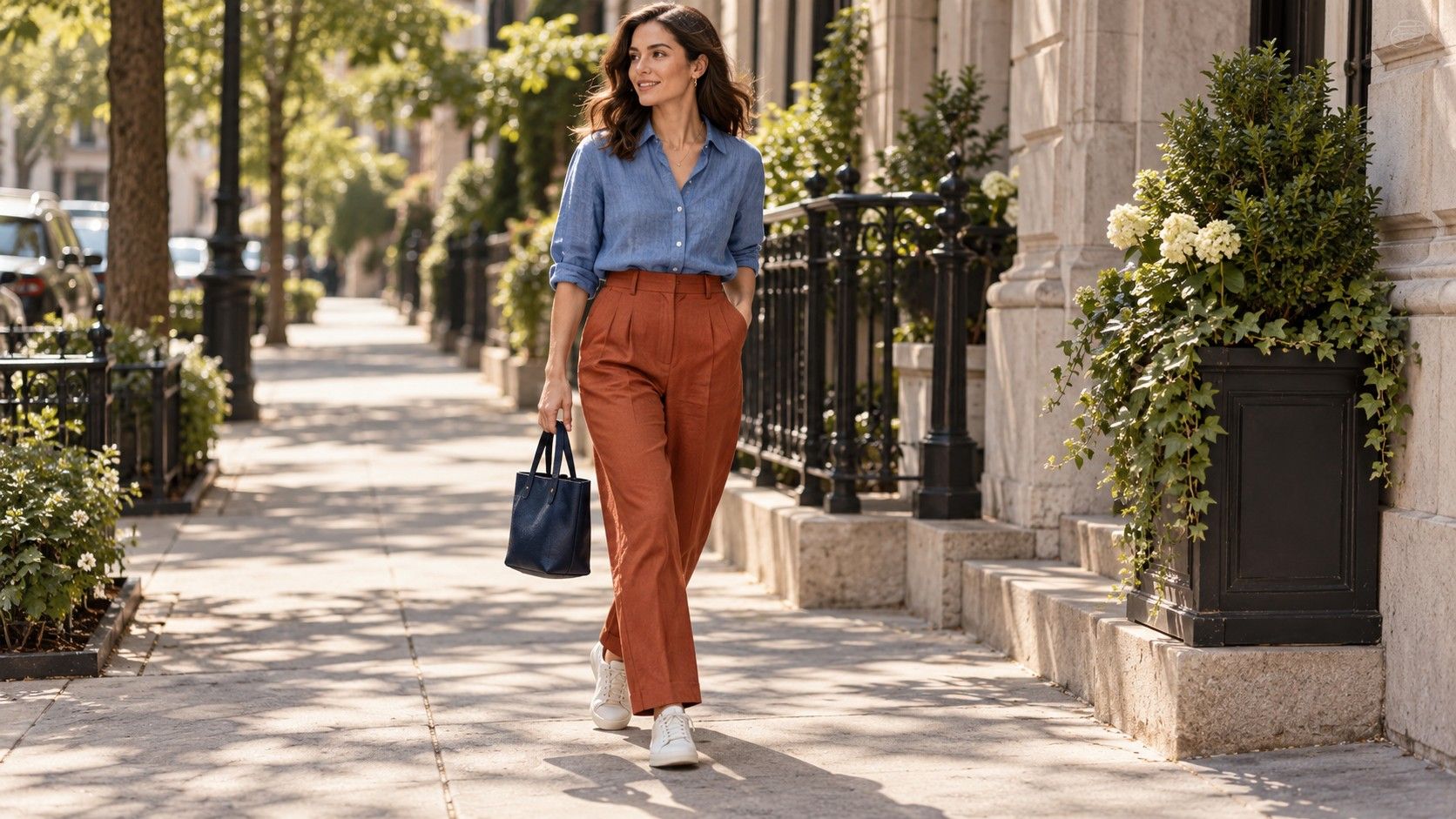
For a brighter weekend outfit, a clear red T-shirt with blue jeans can feel quite different from a terracotta top with ecru denim. Hold both near your face if you have them. Red is not one fixed shade, and neither is orange. A warmer red may be a favorite even if most of your other clothes lean cool. You are allowed to keep exceptions rather than rewriting your identity around them.
When an accent feels overwhelming, reduce its area before rejecting it. A deep coral scarf is a different commitment from a coral coat. Alternatively, move the color farther from your face with a skirt, trousers, or bag. A navy neckline can bridge a bright jacket and your complexion without disguising the jacket you bought because you loved it.
Change texture and neckline when a good color looks wrong
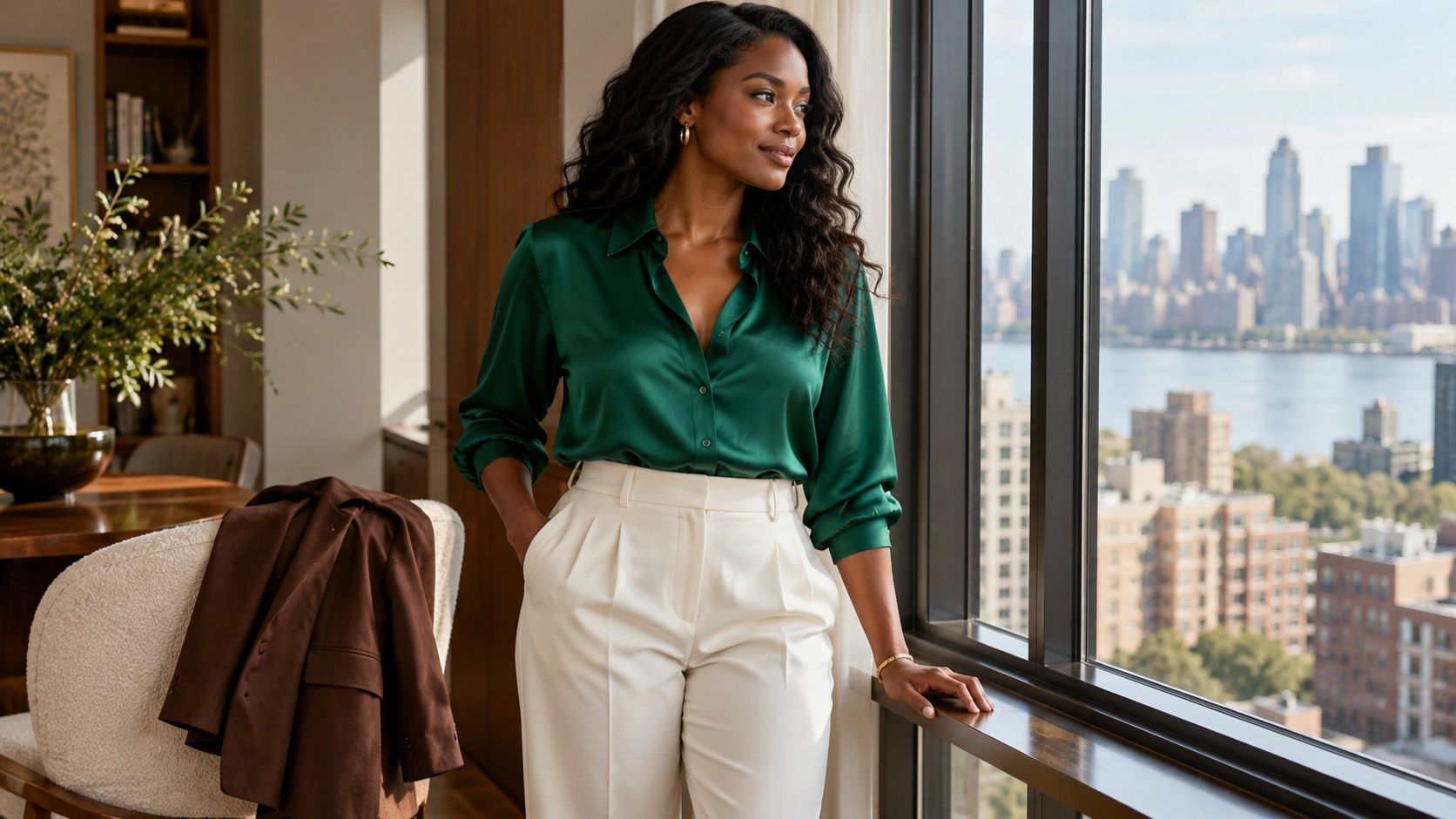
A flat cotton tee, a ribbed wool sweater, and a shiny satin blouse in similar green shades will not look identical. Surface texture and reflected light change the impression of the color. Satin can show bright highlights and dark folds within one garment; brushed fabric often looks softer. Compare them in motion as well as standing still, especially when choosing clothes for an evening event.
The neckline also controls how much color sits directly beside the face. A high cream collar surrounds the chin, while an open cream shirt over a navy tank creates a different arrangement. If a pale blouse seems too close to your skin color, try opening the collar, adding a contrasting inner layer, or wearing a darker jacket. Check whether the adjustment solves the outfit before replacing the blouse.
Prints give you another route. A small cream-and-ink pattern reads differently from large cream blocks, even if the colors are the same. Stand several steps away from the mirror to see their combined effect. Then look closely at the collar: the color touching your face may matter more to your preference than the color that occupies most of the lower garment.
Leave the shop with combinations, not another set of rules
Before paying, picture the piece in two complete outfits using clothes you own. A plum sweater might go with black trousers and loafers for work, then dark denim and sneakers at the weekend. Check the coat too. If the sweater only works when your usual jacket is removed, that matters during a cold commute.
Photograph successful outfits as a reminder, while treating phone color cautiously. Automatic exposure and white balance can shift both clothing and skin. A photograph is excellent for remembering proportions or which trousers you wore; it is less trustworthy for declaring one subtle undertone correct. Your experience of the garment in daylight remains useful evidence.
Search results for clothing colors for olive skin tone female often imply that a gendered chart can settle the question. Clothing does not require a separate color logic based on gender, and ethnicity does not supply a reliable shopping list either. Keep the shades you enjoy, note which specific versions work together, and test future purchases against those real outfits. A short record such as “deep blue, soft white, plum; avoid buying pale beige without trying it” is enough to guide the next shopping trip.