Pale skin does not require a wardrobe designed to make it look darker. A black sweater, a cream shirt, and a bright red jacket can each be enjoyable for different reasons. The useful question is how their color, depth, and texture work in the outfit you are putting on. If a particular shade feels awkward, a small change at the neckline or a slightly different version may solve it. You can investigate that preference without accepting a long list of colors you are supposedly forbidden to wear.
Decide whether you want a quiet outfit or a sharp contrast
Fair skin describes depth, not a complete undertone or seasonal category. Someone with pale skin and dark hair may enjoy a different light-dark balance from someone with pale skin and light hair, but appearance does not dictate taste. A strong black-and-white outfit can be a deliberate choice, just as a soft cream-and-gray combination can be.
Before considering individual colors, decide what you want the clothes to do. For a low-key office day, a medium blue knit with gray trousers might feel comfortable. For an evening event, a dark dress or shirt can provide a much stronger frame around the face. Neither choice needs to make your skin seem warmer or more tan to work.
When people ask what colours suit pale skin, they often want help with an outfit that feels too stark or too faint. Name that specific effect. “The white collar feels abrupt” suggests trying softer white or an open neckline. “The beige top blends into my face” suggests testing a deeper beige, more texture, or a different collar. Those observations are more useful than assigning yourself an entire forbidden color family.
Compare three tops beside a window
Choose a top you like, one you feel uncertain about, and a nearby alternative. For example, compare brilliant white, soft white, and pale gray. Stand in indirect daylight and hold each piece at the same height below your chin. Keep your position, makeup, and hair consistent. A strongly colored wall or warm lamp can affect the impression, so choose a reasonably neutral spot.
Look for the combination you prefer rather than supposed defects. Does the neckline make a pleasing frame? Is your face easy to notice within the outfit? Do you want this level of contrast today? A color that becomes the first thing you see might suit a dramatic jacket while feeling distracting in a shirt you need for frequent video calls.
If none of the three feels convincing, change one feature at a time. Try medium gray instead of pale gray, or a fine-knit cream top instead of a shiny cream blouse. Changing temperature, depth, fabric, and fit all together makes it hard to identify what you liked. Keep the experiment small enough that the result tells you something.
A phone photograph can help you remember combinations, but automatic exposure and white balance can shift both fabric and skin. Avoid using a single selfie to decide your undertone or discard a whole drawer of clothes. The mirror comparison in consistent light and your experience wearing the outfit offer more practical information.
Find a light neutral that still feels like clothing
Soft neutrals can make relaxed, subtle outfits on pale skin, especially when the pieces differ in texture or depth. Try oatmeal knitwear with medium gray trousers, a stone shirt with dark denim, or soft white cotton beneath a navy jacket. The light top does not have to contrast strongly with your complexion if you enjoy the result.
Beige is a broad family. A yellowish cream, pinkish sand, and gray taupe may all sit on the same shop rail, yet look quite different beside your face and your other clothes. Compare the actual fabric. If one pale beige feels indistinct, try a deeper shade before abandoning neutral dressing. You may simply prefer more separation at the neckline.
Texture can provide that separation without a dramatic color change. A cable-knit sweater, a visible shirt collar, or a ribbed neckline has a more defined surface than smooth fine jersey. An open light shirt over a darker tank creates a clear boundary too. Check from several steps away; a detail that seems substantial close up may disappear at normal viewing distance.
Consider the whole outfit's practicality. A cream top that you enjoy with charcoal trousers and your usual coat may be more useful than a precise shade recommended by a palette but difficult to combine. Keep a neutral because it makes outfits, feels comfortable, and suits your routine.
Wear dark clothing at the level of contrast you like
Black near pale skin can produce a strong light-dark contrast. That effect is neither automatically unflattering nor compulsory for a polished outfit. If you like a black turtleneck, wear it. If it feels more severe than you intended, compare charcoal, deep navy, forest green, or dark brown using a similar neckline. A small reduction in depth may be enough.
Opening a dark shirt or jacket changes how much dark fabric directly surrounds your face. A soft white or medium blue inner layer can break up a large dark area. A textured scarf may do the same. These adjustments are helpful when you own a useful black coat but want several ways to style it, rather than another reason to replace the coat.
For an evening outfit, look at the fabric under a lamp as well as in daylight. Black satin can create bright highlights, while matte black wool looks more uniform. A navy velvet piece may appear almost black in low light and clearly blue near a window. Choose the version whose changing effect you enjoy and whose fit works when seated.
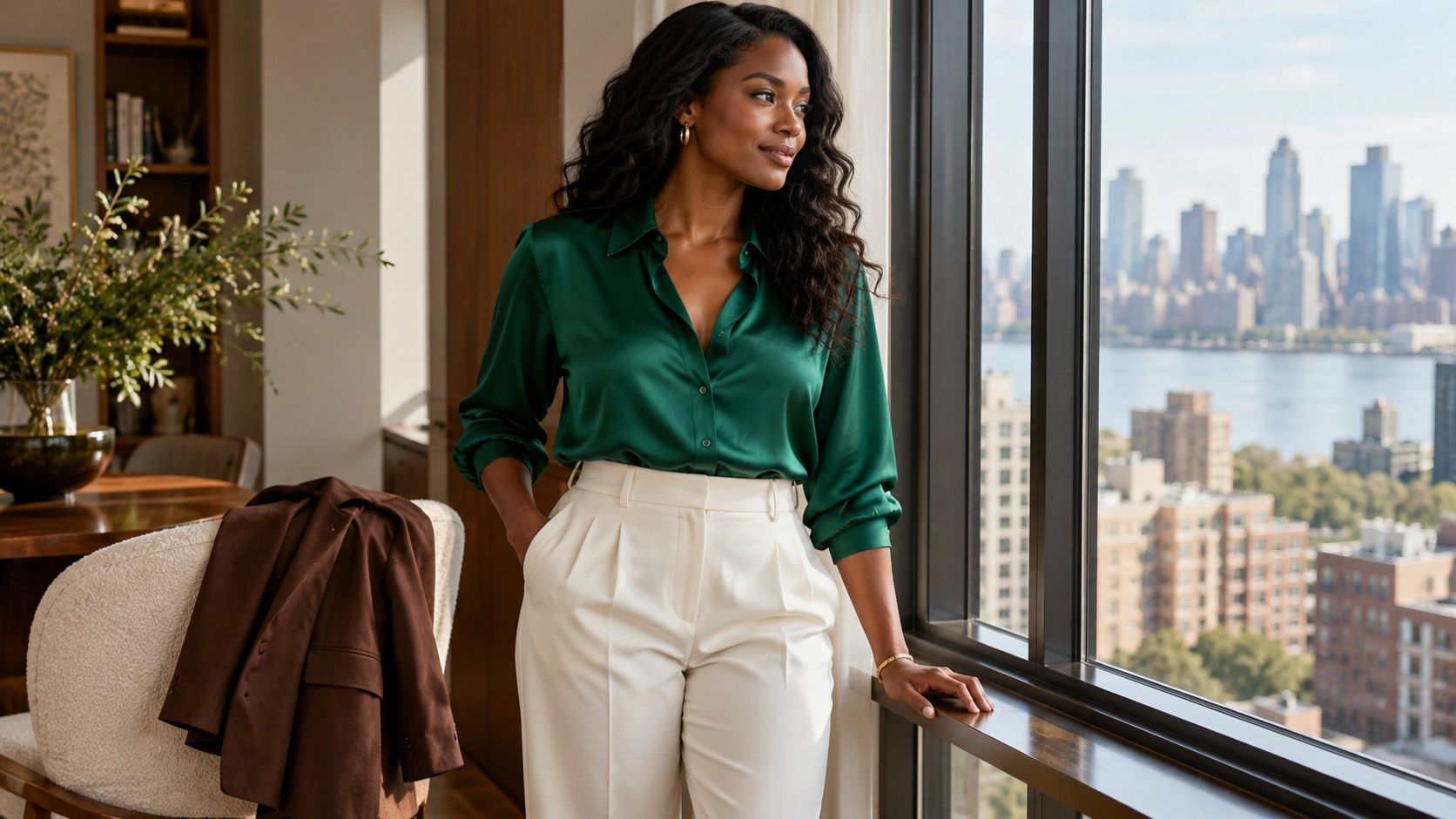
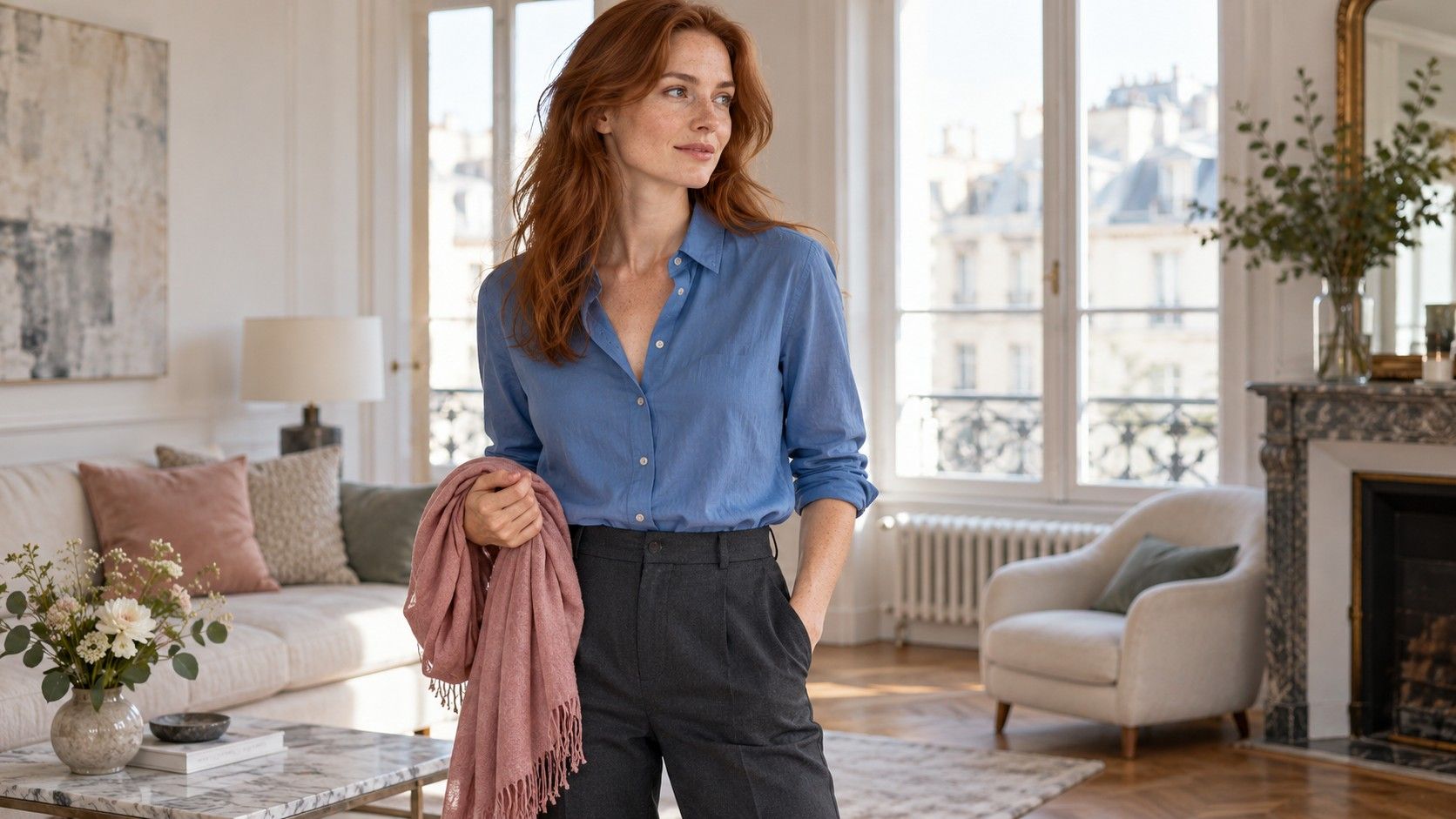
Dark trousers are less involved in framing your face, so they are often an easy anchor while you experiment with tops. Gray trousers with a pink knit, dark jeans with a cream shirt, or black trousers with green can all give you a controlled place to start.
Choose color through a familiar outfit
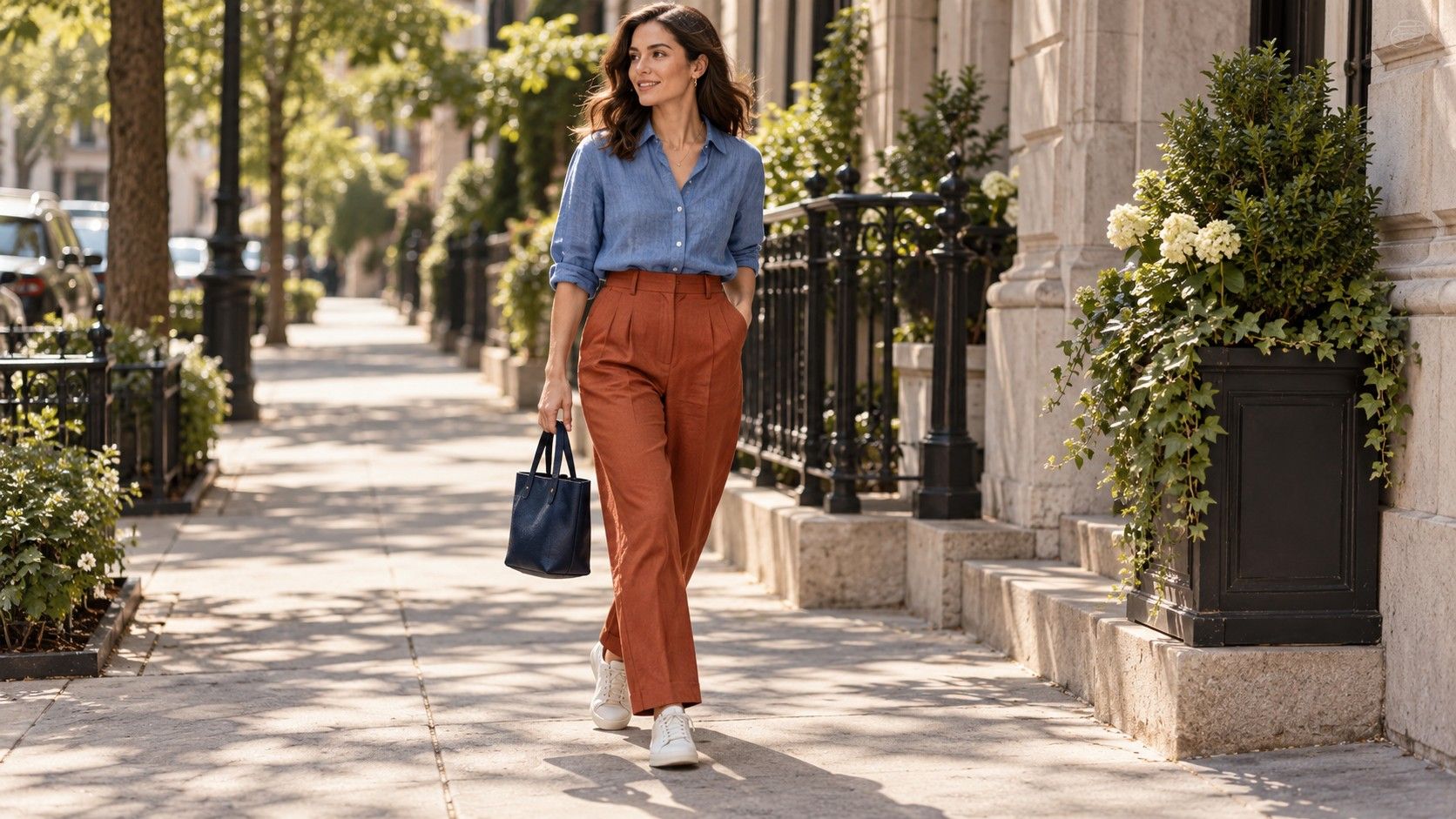
Test new colors with a reliable pair of jeans or trousers instead of building an entirely new combination at once. A muted rose knit might feel gentle with gray, while a clear red sweater adds a deliberate focal point to dark denim. Blue, green, purple, pink, orange, and yellow all contain many versions; a poor result with one does not settle the whole family.
Compare both depth and saturation when a color is difficult. Very pale lilac may feel too faint for your preference, but a medium plum might look balanced. A vivid green may feel too forceful, while a softer green knit works easily. You can also reduce the colored area with an open neutral jacket or move the shade to a skirt, trousers, or bag.
| What you notice | A change worth trying | Keep the rest consistent |
|---|---|---|
| A pale top feels indistinct | Try a medium-depth version or a textured neckline | Use the same trousers and mirror position |
| Black feels stronger than intended | Compare charcoal or navy | Choose a similar collar and fabric weight |
| A bright sweater dominates the outfit | Add an open jacket or compare a muted shade | Keep shoes and bottoms familiar |
| Cream seems too yellow for your preference | Compare neutral soft white or light gray | Check beside the same window |
Prints can make color easier to wear because they distribute it across a pattern. A fine navy-and-cream stripe reads differently from large navy and cream blocks. Inspect which color touches your face, then step back to see the overall effect. You do not need to like every color in isolation to enjoy the combination.
Leave room for preference when you shop
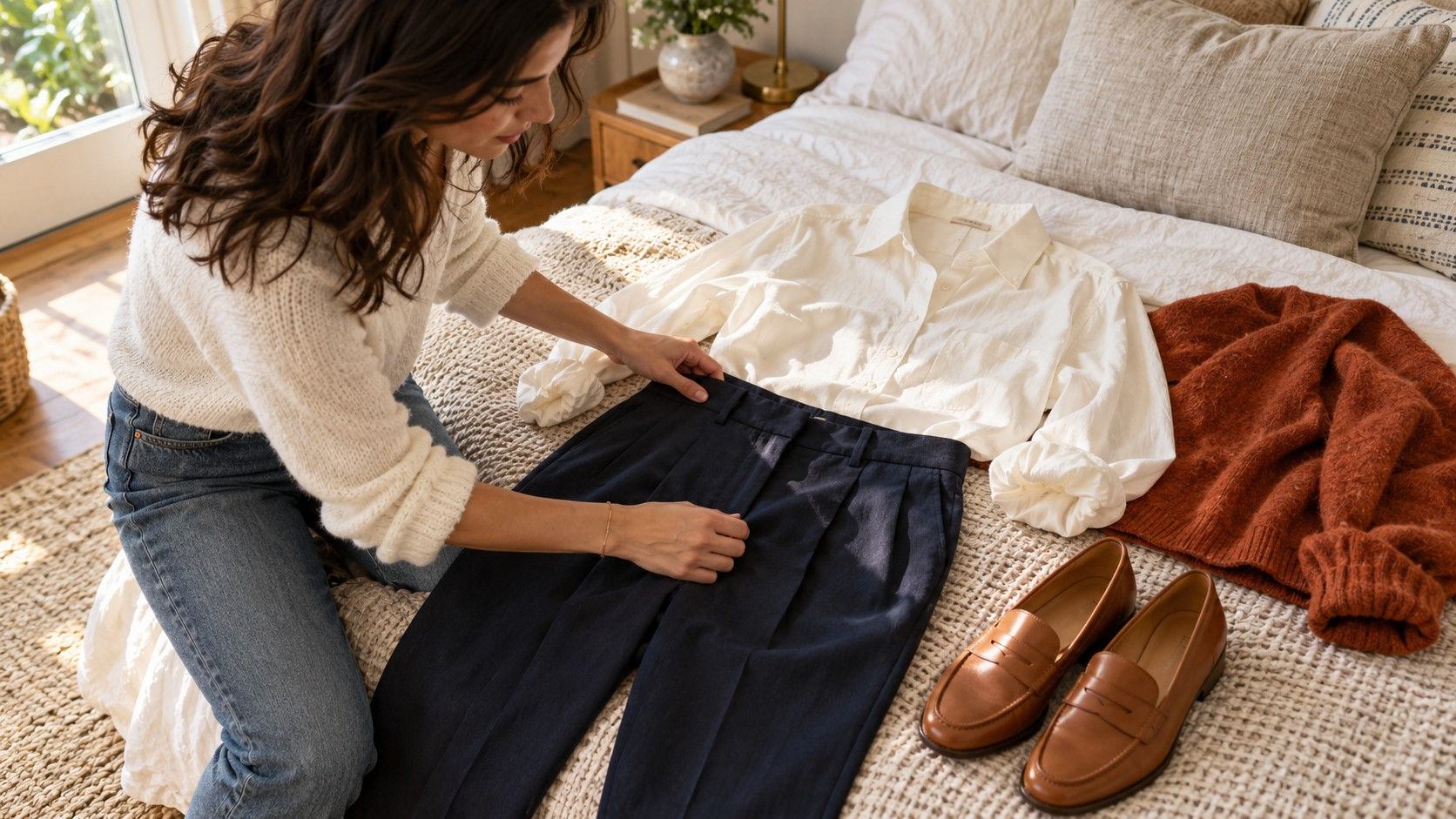
Before buying a new top, plan two outfits using pieces you already own. Check it with your everyday outerwear, especially if the collar remains visible above a coat. A lovely shirt that only works with a new jacket may be a bigger commitment than you intended. Check fit and fabric transparency in useful light too; color alone cannot make an uncomfortable garment a favorite.
Online pictures cannot reliably settle a subtle shade difference. Read the current return conditions if you plan to compare at home, and avoid ordering several alternatives when return shipping would make the test expensive. At the shop, take the garment off the hanger and hold it near your face. Something that looks dull on a rack can be exactly the quiet color you wanted.
Your own comparisons are more useful than a list divided into rigid rules for women and men. Save a few combinations you enjoy and describe them plainly: medium blue with gray, soft white with denim, black with a rose scarf. Let that record guide your next purchase while leaving space for a bright jacket, a pale knit, or another color that appeals to you on its own terms.