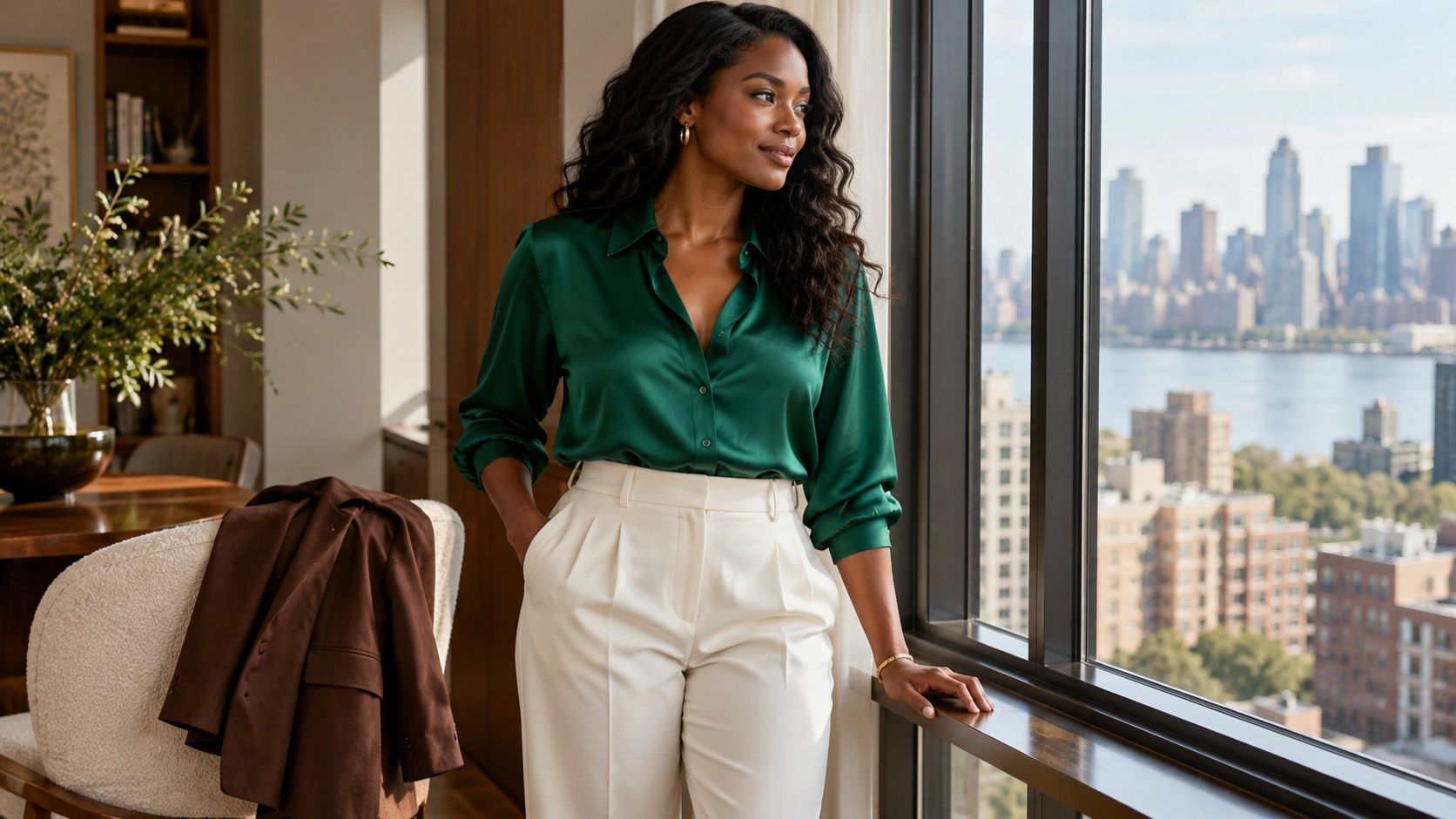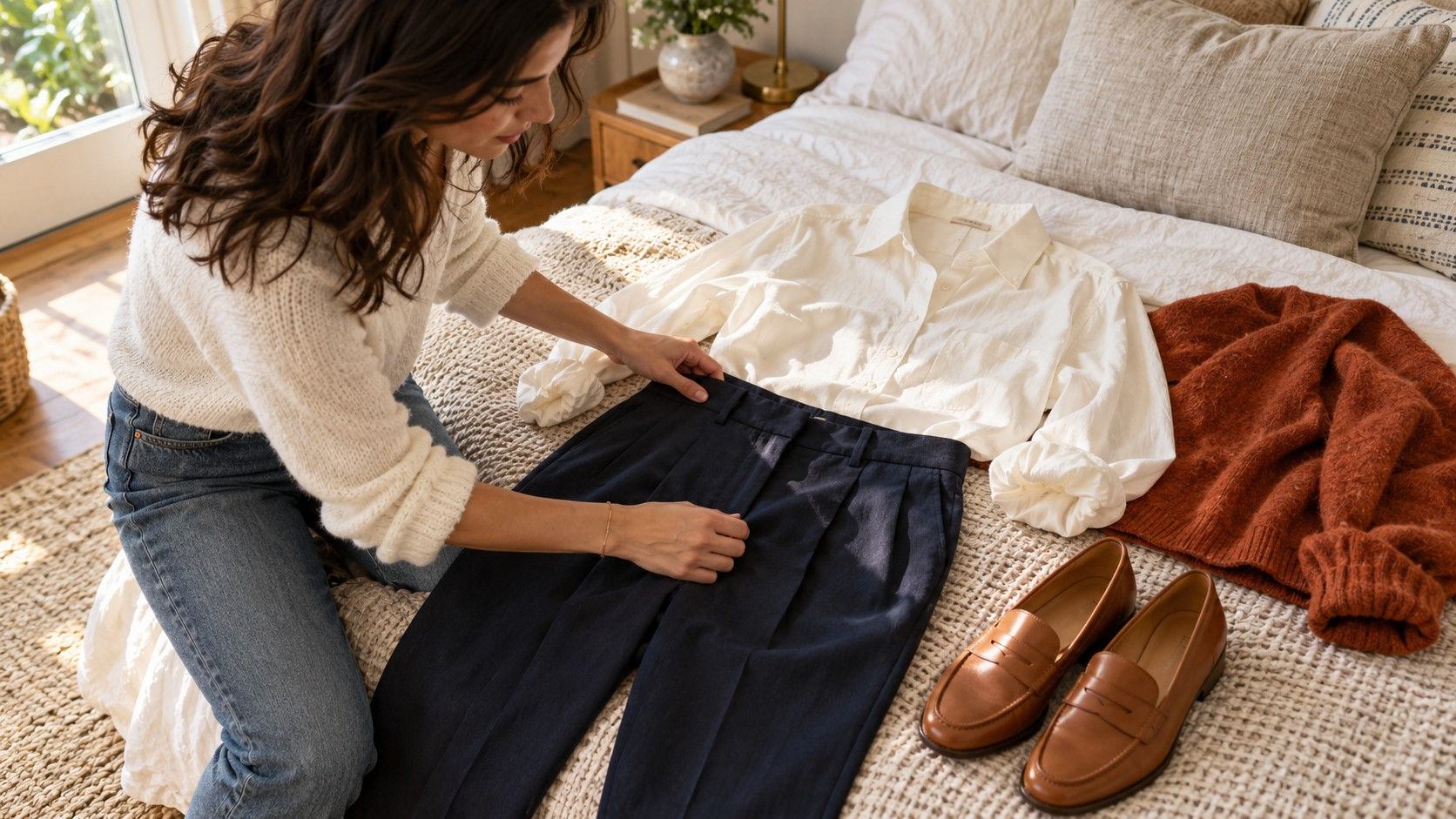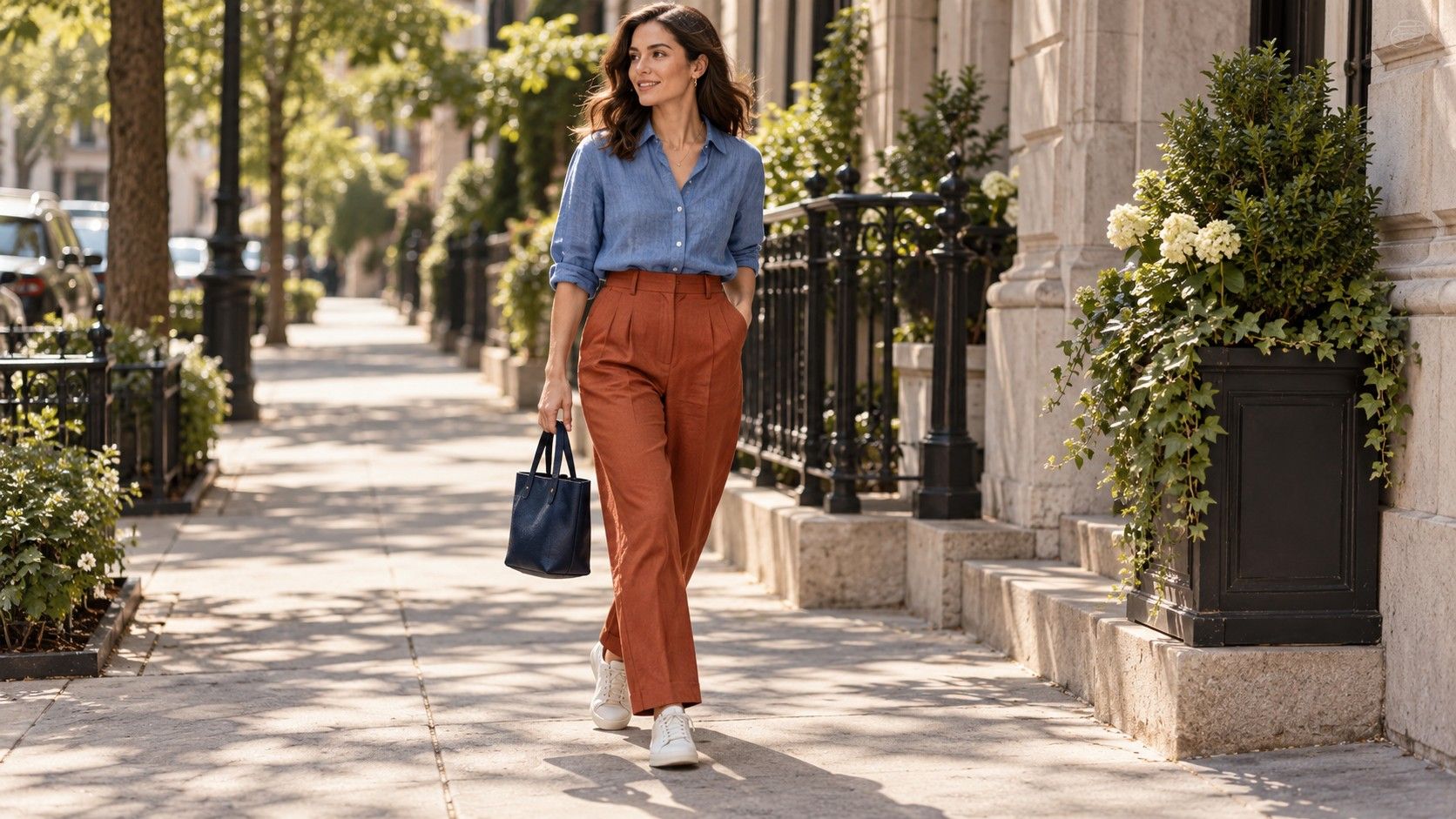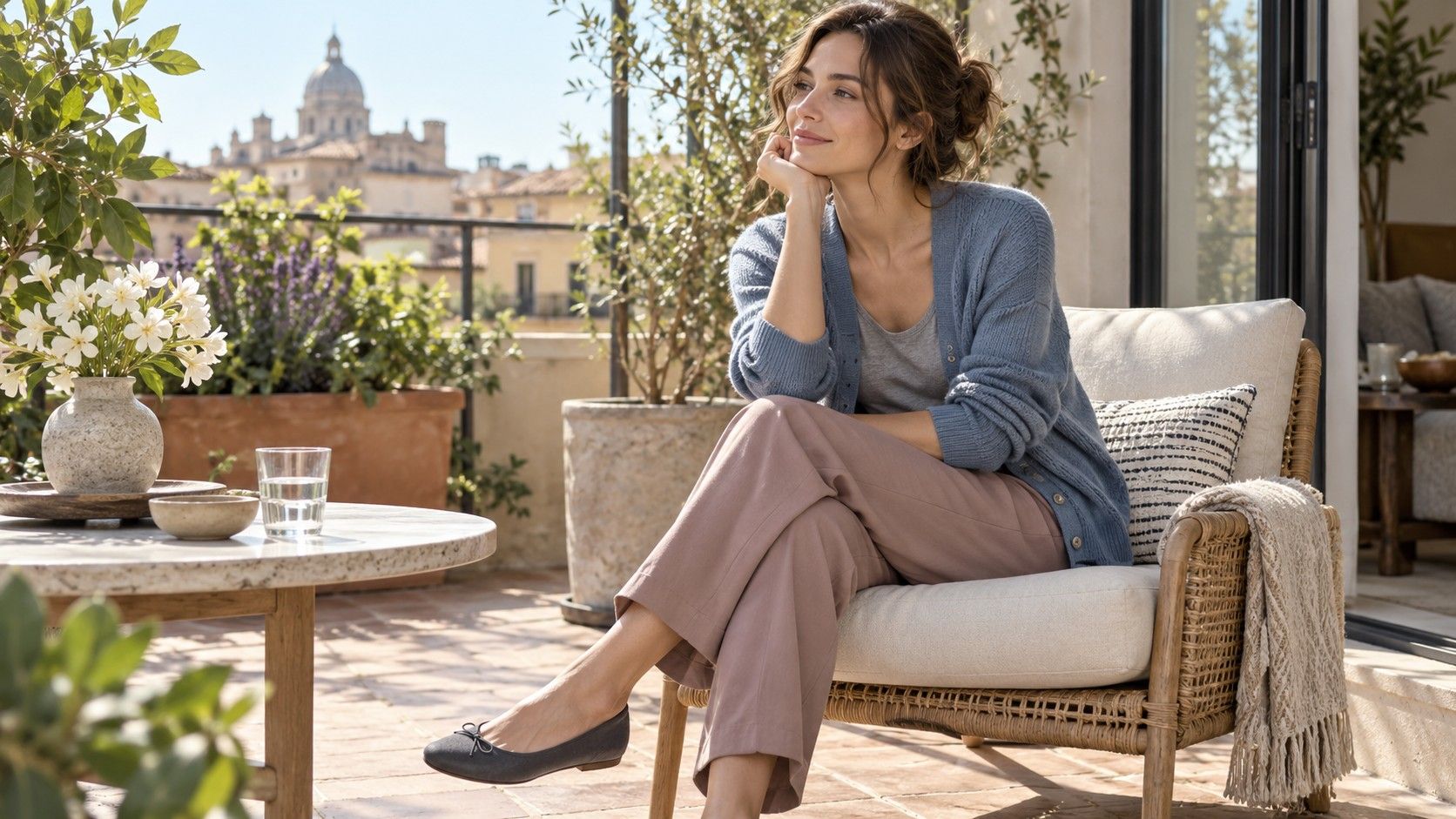
Muted blue, rose taupe, soft gray, and dusty pink can make a gentle wardrobe without turning every outfit into a row of pale pastels. Soft summer is a seasonal styling convention, usually used for colors that look muted and relatively cool. It is a useful source of ideas rather than a fixed identity. Start with the quiet shades you enjoy, then adjust depth, fabric, and contrast so the finished outfit still has enough definition for your taste.
Find a neutral that supports the clothes you already own
Open the wardrobe and look for the trouser, skirt, or jacket you wear most often. A medium gray, softened navy, or rose taupe can be a useful starting point. Rose taupe means a gray-brown with a pinkish impression, but the name varies between shops. Compare the actual garment with a familiar gray and brown to see which direction it leans.
A neutral should earn its place through the outfits it helps you make. If gray trousers work with your muted blue shirt, dusty rose sweater, and an old striped top, they are doing useful work. If a carefully chosen taupe skirt needs three more purchases before you can wear it, it may be a less practical starting point, however closely it resembles an online palette.
Choose the depth to suit the outfit you want. Mid-gray trousers with a pale blue shirt have a visible boundary without the sharpness of black and white. A soft navy skirt gives a darker anchor beneath a lavender-gray knit. You can prefer one combination for work and another for a relaxed day. No seasonal label determines how much contrast you must enjoy.
Keep useful existing pieces in the comparison. A black trouser, white T-shirt, or camel cardigan may still fit your routine. You can try muted colors around them and see what happens. There is no need to empty a functioning wardrobe before exploring a different color direction.
Try muted blue and dusty rose in clothes you will wear all day
For a first outfit, pair a muted blue shirt with gray trousers and the shoes you already use for work. The blue could be slate, washed denim, or a softer blue-gray. Check the fabric beside a window: a shirt that looks muted under a yellow lamp may be brighter in daylight. Color names and screen photographs give only a rough guide.
For a second version, keep the trousers and change to dusty rose. Notice whether you like the color as a whole sweater, a shirt collar, or a smaller layer under a cardigan. Muted does not automatically mean unobtrusive. A broad area of pink can become the main feature of an outfit even when the shade itself is quiet.
Try the top with your usual hairstyle, glasses, and makeup if you wear it. Hold another candidate near your face and compare them in the same position. The useful observation is a preference you can describe: “I like this blue with the gray frame of my glasses” or “the rose looks better under the navy jacket.” This is subjective styling, with no health or biological conclusion attached.
Move around before deciding the outfit works. Sit at a desk, lift your arms, and put on the outer layer. A beautiful dusty rose shirt that gaps or creases awkwardly may get less wear than a slightly brighter knit that fits well. Comfort and maintenance belong in the decision alongside the color.
When a low-contrast outfit feels washed out, give it an edge
Low contrast usually describes an outfit whose colors are fairly close in depth, such as a blue-gray top with medium gray trousers. It can look calm and continuous. If that same combination feels vague to you, add one darker point: slate shoes, a soft navy belt, or a deeper blue cardigan.
Check the neckline as well as the color. A pale gray knit with a broad crew neck shows a different arrangement from a V-neck worn over a darker camisole. A small darker strip at the collar can define the upper part of the outfit. Try folding or opening a collar before concluding that an entire shade is wrong for you.
Proportion makes a difference. A long light cardigan over a light top and light trousers may create a large uninterrupted pale area. Swap only the trousers for medium gray, or wear the cardigan open over a darker top. Step back from the mirror to judge the result. Close-up checks can exaggerate a detail that barely registers at ordinary distance.
Keep bright accents available if you enjoy them. A stronger berry bag or clear blue scarf may be exactly what you want with soft neutrals. Try a small area first and then a larger one. The question is whether you like the outfit's balance, rather than whether every piece remains inside an illustrated palette.
Use fabric and prints when the colors are close together
Muted shades can look more interesting when the surfaces differ. A brushed gray knit beside smooth blue cotton has a visible change in texture. Rose taupe suede shoes add another surface without introducing a new strong color. You do not need all three textures at once; begin with two pieces and check how clearly they differ.
Shine deserves a separate check. A soft mauve satin top may catch the light and become more prominent than its flat swatch suggests. That can work well for an evening outfit with charcoal trousers. Look at it while moving under the kind of light you expect at the event.
With prints, inspect the background and the distance between the colors. A blue-gray shirt with a narrow dusty pink stripe reads differently from one with broad white stripes. If you want a quieter result, look for print colors of similar depth. For more definition, keep a darker outline or background and choose a softer partner elsewhere in the outfit.
Choose one print color to repeat. A scarf with rose, slate, and gray can sit over a slate sweater and gray trousers, with no need for pink shoes or a matching bag. If you already own a strong black-and-white print, try it with muted blue trousers and inspect the result. The print may supply the crispness you enjoy, even if it sits outside the usual soft summer examples.
Keep denim and build versions for work, weekends, and evenings
Washed blue denim often makes a convenient bridge between a muted palette and everyday dressing. Try straight jeans with a dusty rose knit and gray shoes, or a blue-gray shirt with deeper denim and a taupe cardigan. Fading, stitching, and fabric wear affect the overall look, so use the jeans in your wardrobe rather than searching for a theoretically perfect wash.
For work, a soft navy jacket over a muted blue shirt and gray trousers gives the outfit more structure. If you prefer fewer layers, use a charcoal skirt or trouser with a rose taupe top. Add the bag and shoes before judging the colors. A large tan tote can become a major part of the visible outfit, even when you thought of it as a purely practical item.
A weekend version could be a gray sweatshirt, faded jeans, and a muted green overshirt. Soft sage is one option, though some sages lean noticeably yellow. Compare it with your blue and gray pieces in daylight. If the green feels disconnected, try repeating it in a small print or simply choose the blue overshirt you already like.
Evening clothes do not have to become pastel. A deep slate dress with pewter-toned shoes, or charcoal trousers with a muted plum blouse, can keep the overall color direction while adding depth. Jewelry can be chosen by preference. A silver or softly colored metal may feel quiet, while a warmer metal gives a little contrast; try both against the actual neckline.
Buy the missing partner, then test it at home
When looking at soft summer color palette clothes, begin with the garment that currently has no useful partner. Perhaps the blue-gray skirt works only with one top, or the dusty rose jacket needs a more comfortable underlayer. A versatile gray or muted blue piece may solve that problem better than another appealing accent color.
Use specific shade notes when shopping: “medium blue-gray, matte fabric” or “pinkish taupe, darker than my cream shirt.” These are more practical than a season name, because shops use color terms inconsistently. Take a photograph of the existing garment for reference, while remembering that your screen can shift its appearance. If possible, compare the pieces directly before keeping the purchase.
At home, try the new garment with two complete outfits before removing tags, subject to the seller's return terms. Include underwear, shoes, and the coat you expect to wear. Check daylight and normal indoor lighting. A slightly warmer gray may fit your wardrobe perfectly; a technically closer match may look less appealing because of its finish or cut.
Save the combinations that work and stop there for a while. Wear them through a normal week before expanding the palette. You may find that muted blue and gray are enough, with dusty rose as an occasional accent. You may prefer more plum, green, or stronger contrast. The point is a set of clothes you can reach for with confidence and adapt to your day.