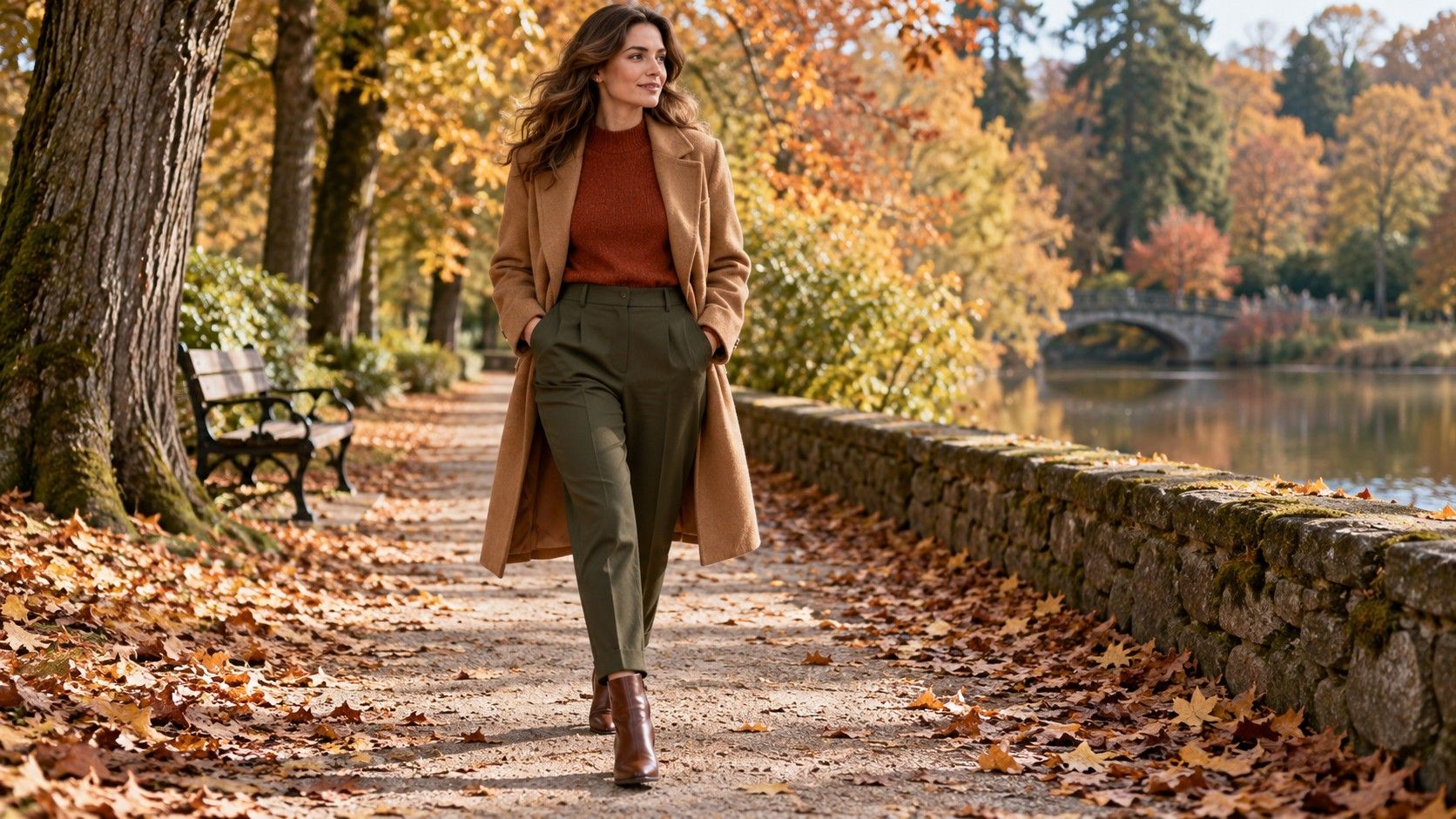
Olive trousers, a rust sweater, and a camel coat can form the beginning of a useful wardrobe, but wearing all three together is only one option. Warm autumn is a styling convention built around earthy, warm-looking colors, with plenty of variation between individual palettes. Use it to find combinations you enjoy. You can keep favorite denim, black boots, and a white shirt while introducing a few warmer shades that make getting dressed easier.
Start Monday with the trousers you already trust
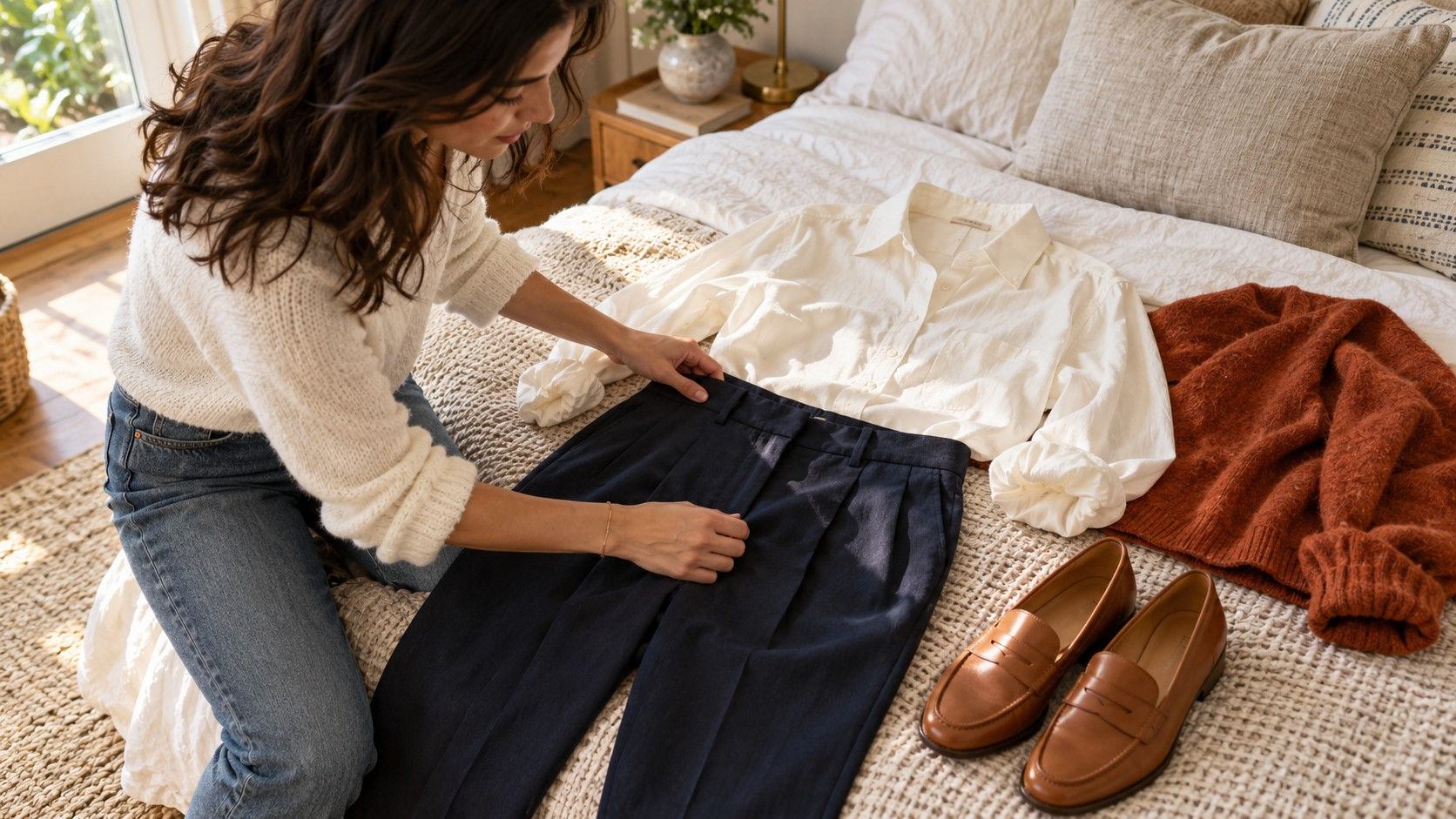
Choose the pair that fits your workday: olive cotton trousers, chocolate tailoring, or dark jeans. Then set out two tops you could actually wear with them. Cream and a muted ochre are a manageable first comparison with olive. The cream version may feel quieter; the ochre version brings more color close to your face. Put on the same shoes for both so you can judge the change clearly.
Olive is a particularly useful anchor because it varies from pale gray-green to deep brown-green. Check which version you own before buying something described as an exact match. A faded olive utility trouser may sit comfortably beside oatmeal, while a deeper olive wool trouser can take a richer rust knit. The label tells you much less than the fabric in your hands.
For a more formal office, try chocolate trousers, an ivory shirt, and a camel jacket. For a casual day, switch to an ecru T-shirt and an open overshirt. These are different levels of dress built from the same color relationships. Check collars, hems, and shoe condition before deciding that an outfit needs more color; sometimes the unfinished detail is practical.
Choose rust, camel, and cream by daylight rather than by name
Set the garments beside a window before planning the week. Rust can be orangey, reddish, or surprisingly muted. Camel may look golden under a shop lamp and pinkish at home. Cream ranges from barely tinted white to a pronounced yellow. Holding two candidates against the trousers makes those differences much easier to see than scrolling between separate product photographs.
Try one garment at a time near your face if that is where you plan to wear it. Keep your position and the room lighting consistent. Notice whether you prefer the stronger orange of a terracotta shirt or the quieter look of a brownish rust. This is personal judgment, not a diagnostic test. A seasonal label does not require every warm-looking shade to suit your taste equally.
If a camel sweater feels too yellow, compare oatmeal or a softer tan before discarding the whole idea. If cream feels too pale with the trousers, try a deeper top or leave a dark cardigan open over it. Small changes in depth and coverage can solve what first looked like a temperature problem. You do not have to replace the garment simply because it sits imperfectly within a palette.
Take a quick photograph of the finished combination, but check it in the mirror too. Automatic phone settings can alter the apparent warmth of a room. A picture is useful for remembering what went with what; it cannot settle every subtle difference between two browns. For purchases, compare the new item directly with a familiar piece whenever possible.
Build three weekday combinations before adding more pieces
A short rotation makes a palette practical. Start with olive trousers, chocolate trousers, a cream shirt, a rust knit, and a camel layer if those pieces already suit your routine. The aim is to find several outfits from what you own. Substitute freely: a brown skirt can fill the role of the trousers, and a tan cardigan can replace the jacket.
For Tuesday, pair olive with cream and brown shoes. Wednesday can be chocolate with rust, using the cream shirt collar or cuffs if you want a lighter break. Thursday might be the cream shirt with chocolate trousers and the camel layer. Wear the rust knit with denim on Friday if a more relaxed outfit works for your day. There is no need to wear every palette color at once.
Lay the outfits out with the underlayers and socks you will need. A thin cream shirt may require an appropriate camisole; a cropped knit may leave an uncomfortable gap above the waistband. These details affect whether an attractive combination becomes a repeat outfit. Check laundering too. A rotation that depends on the same shirt three days in a row needs a realistic plan.
One pair of dark brown shoes can connect several of these combinations. Tan shoes make a lighter interruption below dark trousers, which you may enjoy or prefer to avoid. Use the shoes you can walk in and compare the result at full length. Color coordination has little value if the only matching pair makes a normal day uncomfortable.
Keep denim and black when they solve a real wardrobe problem
Warm autumn color palette clothing ideas often lean heavily on brown and beige. That can be helpful inspiration, yet an existing wardrobe rarely begins as a blank page. If blue jeans are your most useful trousers, try them with a rust sweater and brown shoes. Faded denim gives a different effect from crisp dark indigo, so test the pair you actually own.
Black boots can work with olive trousers and a cream top, especially when you repeat a little black in a belt or bag. Repetition is optional; it is simply one way to make the dark shoes feel connected. If a large black coat feels stark over warm pale layers, leave a rust scarf visible or choose a deeper brown top beneath it. Change the area of the colors before shopping.
A white shirt can stay too. Try it under the camel layer so only a smaller white section shows, then compare with cream if you have both. You might prefer the sharper white edge for a work meeting and the cream version for a weekend. Those choices can coexist. A palette is useful when it helps you dress for the life you have.
Pay attention to prints that already bring the colors together. A plaid scarf containing navy, rust, and tan can connect jeans to a camel jacket. A small floral print with olive leaves might suggest the trouser color. Pick one or two colors from the print rather than trying to repeat all of them in accessories.
Use texture to stop earthy layers from looking flat
Several medium-depth browns can merge into a single block, particularly in a flat indoor photograph. Texture gives the eye more to work with. Compare a smooth cotton shirt with a ribbed knit, brushed wool, corduroy, or a woven bag. A camel knit against chocolate corduroy has a different surface relationship from two smooth pieces in nearly the same shade.
Choose one obvious change in texture before adding decorative details. An olive cotton trouser with a rust wool sweater may already have enough variation. Adding a patterned scarf, a shiny belt, and a contrasting bag can make the outfit feel busier than intended. Put the accessories on one at a time and stop when the outfit feels complete to you.
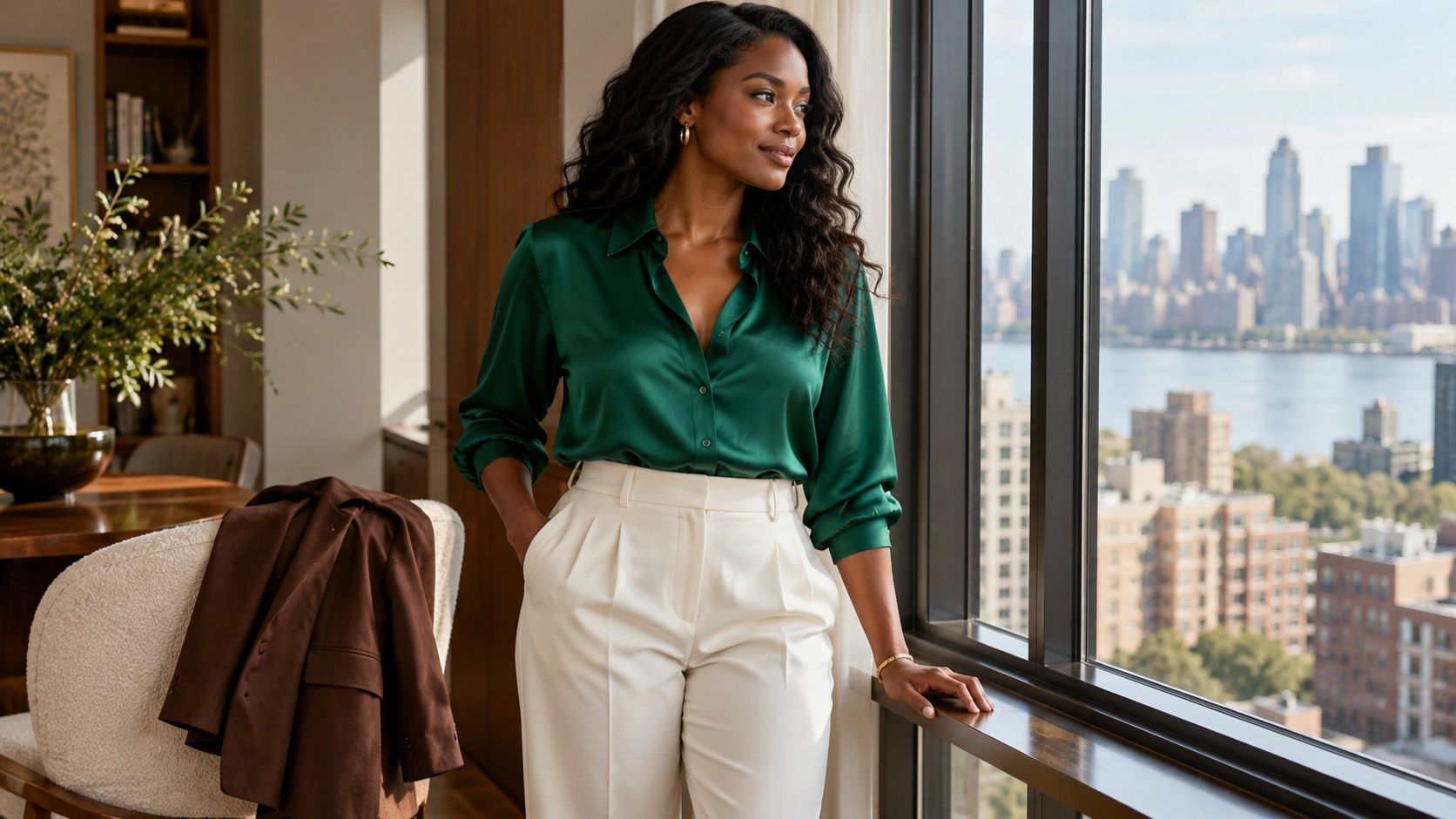
For an evening meal, an earthy palette can feel more dressed up through finish and cut. Try a dark brown skirt or tailored trousers with a coppery satin top, then keep the shoes simple. Copper-colored fabric reflects light differently from a matte rust knit; check it under indoor lighting and while moving. A fabric that looks subtle flat on the bed may become the strongest part of the outfit when worn.
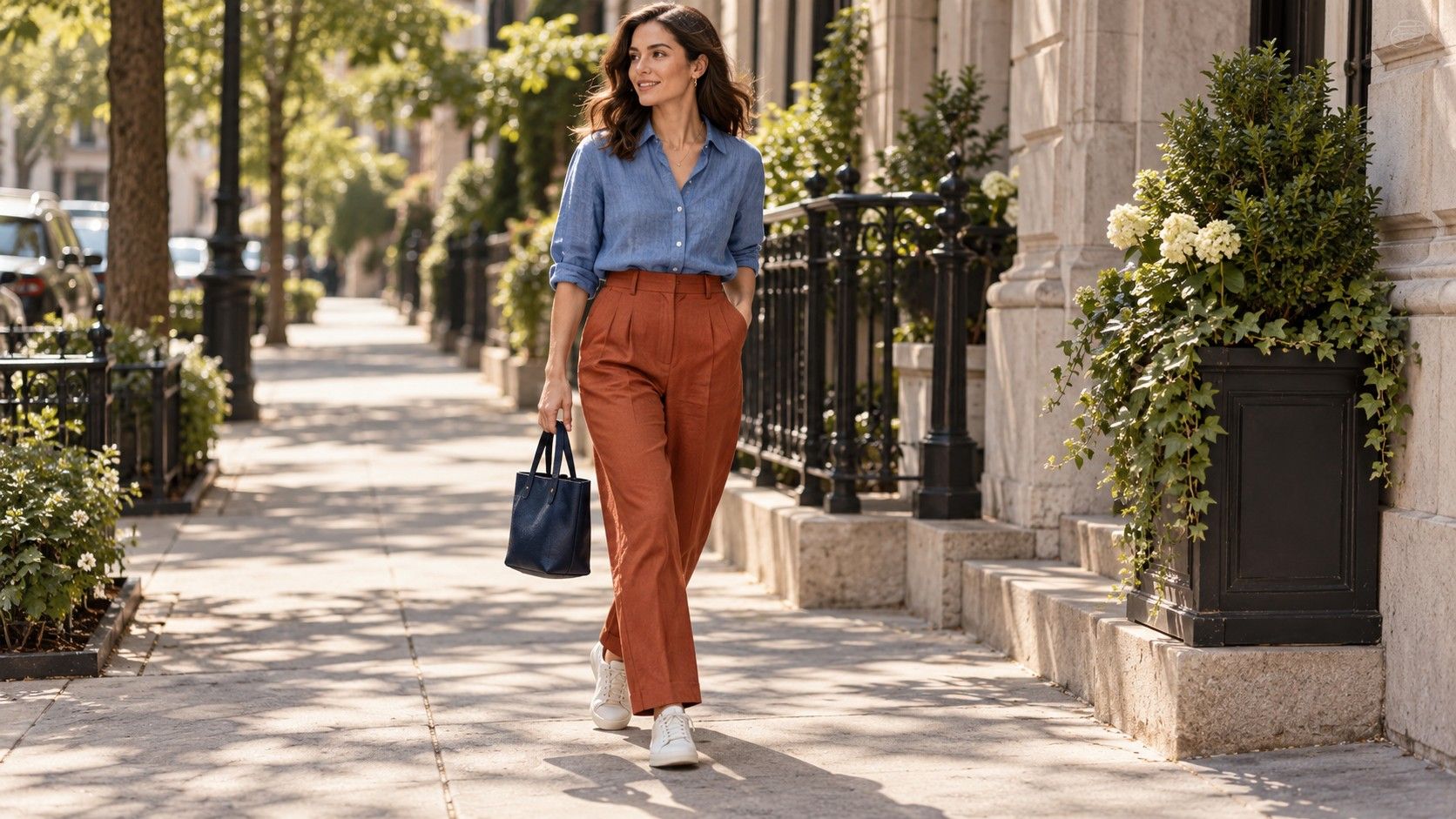
Warm weather needs a lighter version of the same idea. Ecru linen trousers with a terracotta cotton top and tan sandals can carry the palette without heavy knits. Test linen for opacity and creasing with the underlayers you expect to wear. The color may be right while the fabric demands more attention than you want on an ordinary morning.
Make the next purchase fill a missing combination
After wearing the rotation, notice the gaps. Perhaps the olive trousers have three partners, while the rust skirt has none. A cream top that works with both may be a more useful purchase than another camel layer. Name the outfits before buying the item, including the shoes and outerwear. This keeps a coherent palette from becoming a collection of pieces that never leave the hanger.
Take notes on the shades you enjoy: reddish rust, muted olive, golden camel, or oatmeal rather than yellow cream. Those descriptions help you compare a new garment, but leave room for exceptions. Store color names are inconsistent. Check the actual shade, fabric finish, fit, and return terms instead of relying on a product labeled with your season.
If you are new to the palette, start with one top or scarf rather than a full replacement wardrobe. Wear it with two familiar outfits across a normal week. You may discover that warm accents are enough, or that you enjoy a broader move toward brown and olive. Either result is useful. The strongest wardrobe is the one you can put on, move in, wash, and reach for again.